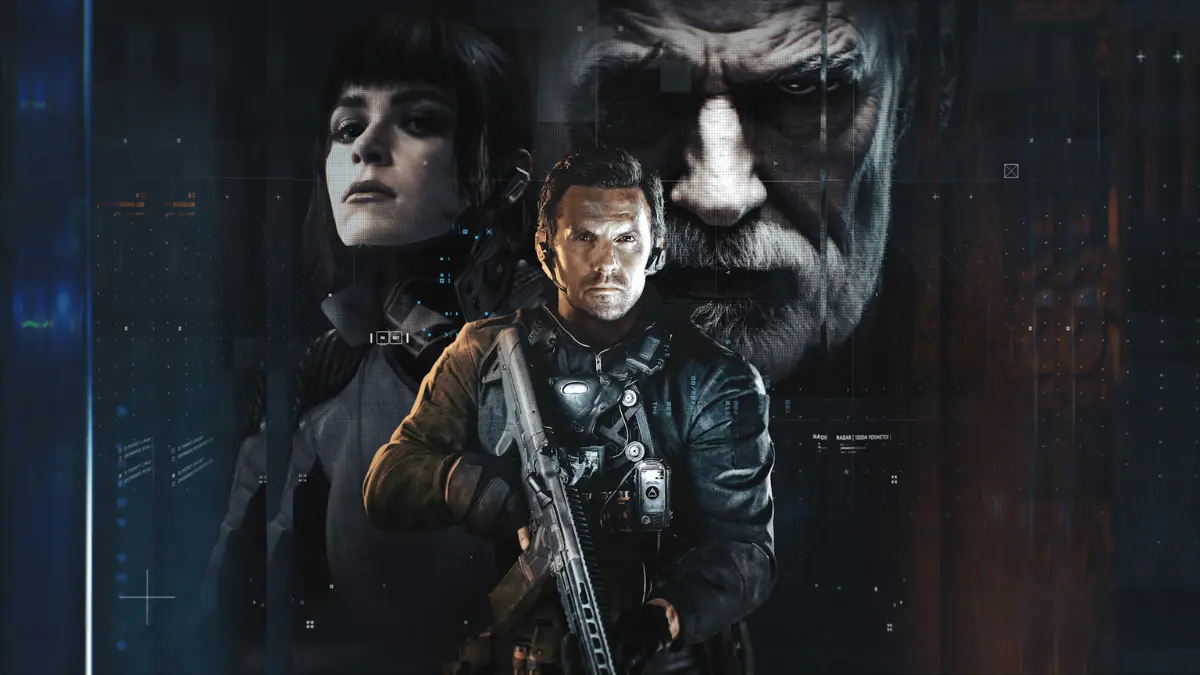
The latest Call of Duty is drawing notably fewer players than last year’s entry. Multiple tracking sources show Black Ops 7 launched with significantly lower engagement than Black Ops 6 across key markets.
Steam data reveals the starkest drop. Black Ops 7‘s PC launch pulled roughly one-third the concurrent players of Black Ops 6‘s debut. While Steam represents only a portion of CoD’s total playerbase, the year-over-year comparison signals a broader trend.
The comparison between entries tells the story. Black Ops 6 spent four years in development. It launched with substantial content, a praised campaign, and widespread positive reception. Industry analysts noted it as one of the strongest CoD releases in years.
Black Ops 7 arrived just twelve months later as a direct sequel. Players and critics describe it as rushed. The campaign receives harsh reviews for weak storytelling and poor follow-through on BO6’s narrative threads. Multiplayer offers refined movement mechanics but reuses maps and feels more like a large update than a new game.
Battlefield 6 emerges as the unexpected winner. EA’s latest entry represents a sharp recovery after Battlefield 2042‘s disastrous 2021 launch. Players describe BF6 as stable, fun, and well-supported. For the first time in years, Battlefield appears to be genuinely pulling players away from Call of Duty’s orbit.
EA reportedly wants to capitalize on this momentum. Industry chatter suggests plans for Battlefield 7 within two years, returning to a faster release cycle. This echoes EA’s failed 2010–2013 experiment alternating Battlefield and Medal of Honor annually. That strategy produced Medal of Honor (2010), Battlefield 3 (2011), Medal of Honor: Warfighter (2012), and Battlefield 4 (2013) before Warfighter‘s poor performance killed the Medal of Honor reboot.
Development strain shows across recent Call of Duty releases. Black Ops Cold War was rushed out early when a Sledgehammer project faltered. Modern Warfare III in 2023 is widely considered a rush job. Now Black Ops 7 continues the pattern of shortened turnarounds.
The annual model creates visible production pressure. Activision rotates between multiple lead studios to maintain the yearly cadence. But supporting Warzone as a live service while pumping out annual releases has blurred boundaries and shortened effective development time.
Player complaints extend beyond campaign quality. Many cite aggressive monetization including battle passes and crossover cosmetic content. The games now function as live-service platforms with constant events and collaborations. One viral example: a Beavis and Butt-Head battle pass that players mocked as emblematic of the franchise’s direction.
AI-generated content drew particular criticism. Black Ops 7 includes AI-created calling cards and other assets. Some players report refusing to play even with free Game Pass access once they learned about the AI usage. The controversy connects to broader industry tensions around generative AI replacing human artists.
Technical issues compound the problems. Installation size exceeds 180–220GB for the full experience. This creates barriers for console players with standard hard drives. Older hardware like Xbox One X reportedly struggles to maintain stable frame rates, making matches feel unfair when mixed with current-gen players.
Competition fragments the shooter audience more than ever. Helldivers 2, Arc Raiders, Apex Legends, and other titles all compete for the same pool of players. The days of committing to one shooter year-round are fading as strong alternatives multiply.
Yet CoD remains too big to truly fail
Despite the decline, Call of Duty still dominates sales charts. Over the past 20 years, only two or three years saw CoD finish outside the #1 spot for annual sales. Even in those years, it placed second or third.
The franchise’s household name status and massive marketing budget insulate it from catastrophic failure. Casual players buy Call of Duty like they buy FIFA or Madden each year regardless of year-over-year quality shifts.

