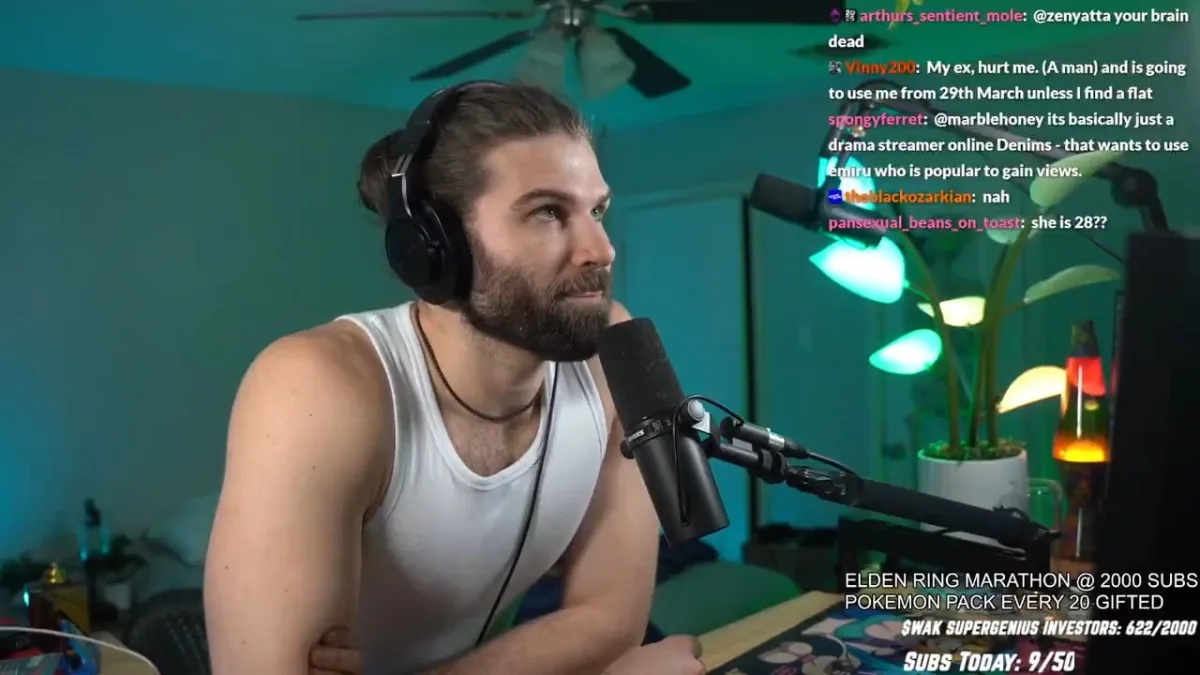
WakeWilder addressed on stream why creators in the OTK and Twitch sphere catch heat for maintaining close ties with Asmongold. His explanation centered on a straightforward principle: audiences judge you by the company you keep.
The core of Wake’s argument is that repeated public collaboration signals approval. When viewers see someone consistently appear alongside a polarizing figure, they assume shared values. Staying silent on politics or claiming neutrality doesn’t stop this process.
Wake framed the issue as one of visibility and pattern recognition. People online have limited information about creators’ actual beliefs. They rely on what they can see: who streams with who, who benefits from whose platform, and who stays in orbit when controversy hits.
The timing matters because Asmongold has increasingly shifted from World of Warcraft content into political rage-baiting commentary. That evolution raises the stakes for everyone connected to him through OTK or regular collaborations.
Emiru became a focal example of this dynamic after she didn’t denounce ICE, or the closeness of her relationship to Asmongold. The OTK-affiliated creator has fielded questions about political topics on stream and typically deflects by saying she doesn’t follow politics. But Wake’s point is that deflection doesn’t remove the reputational risk when you remain publicly associated with someone making contentious statements.
The distinction Wake drew is important: this isn’t about private friendships. It’s about public-facing partnerships that generate mutual benefit. Raids, co-streams, shared org content, and audience crossover all make these relationships visible and valuable.
The money problem
These collaborations are monetized. Shared audiences mean shared revenue potential. Brand deals and sponsorships care about optics. Companies evaluate not just what a creator says, but who they’re linked to in the public eye.

