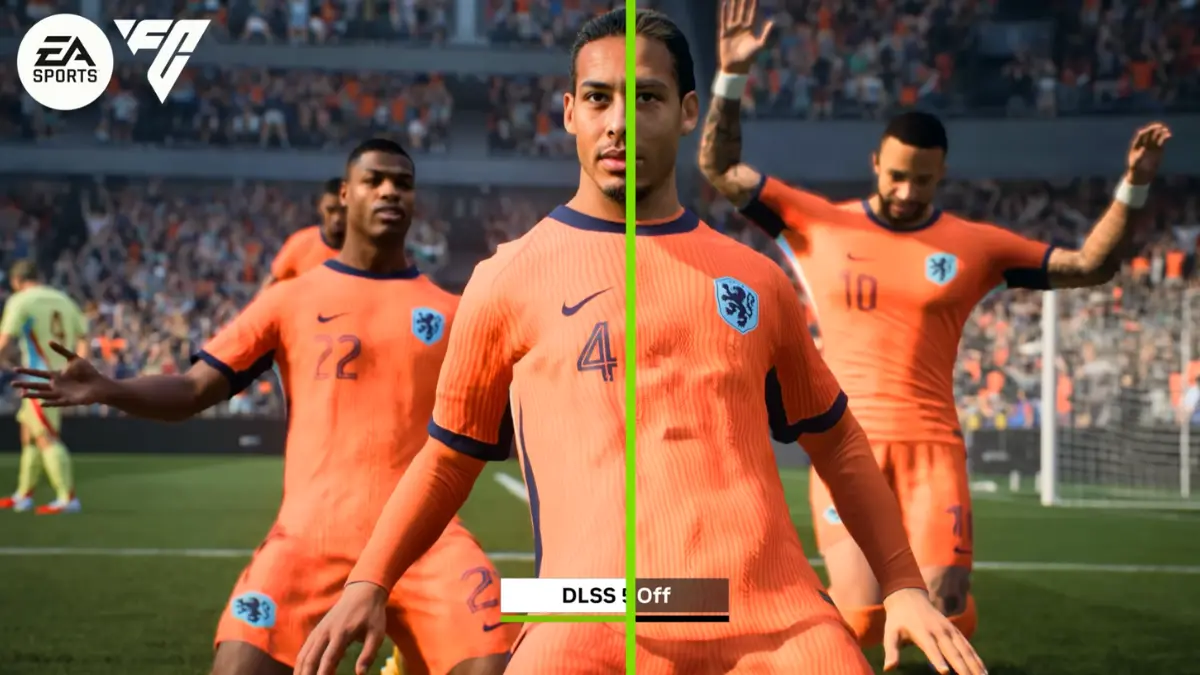
Kotaku published interviews with multiple game developers responding to Nvidia’s DLSS 5 demonstration, and the feedback was overwhelmingly negative. The article claims developers are concerned the new tech crosses a line from performance enhancement into unwanted artistic changes.
DLSS 5 represents a departure from traditional DLSS upscaling technology. While previous versions focused on rendering games at lower resolutions and using AI to reconstruct higher-quality images for better performance, DLSS 5 appears to use neural rendering to actively alter in-game assets. This includes character faces, skin tones, makeup, and material textures.
Nvidia showcased the technology through side-by-side comparisons across several games. The demos included Starfield, Hogwarts Legacy, Assassin’s Creed, Star Citizen, and what appears to be Resident Evil 9. Each comparison showed DLSS off versus DLSS on, highlighting the visual differences.
The most controversial example involves a character named Grace from the Resident Evil demo. According to the comparisons, enabling DLSS 5 substantially changes her appearance. The tech reportedly adds glamour makeup, alters her facial structure, and changes her skin tone in ways that fundamentally shift the character’s look and narrative tone.
Developers interviewed by the outlet expressed concern that the changes undermine artistic intent. Grace is described in the game as a shy introvert, but the DLSS 5 version allegedly gives her a styled, model-like appearance that contradicts her character. This kind of semantic alteration goes far beyond typical upscaling artifacts like blur or sharpness issues.
The distinction matters because faces are uniquely sensitive in game visuals. Players notice even minor changes to facial identity, expression, and skin tone. What might be acceptable on background textures becomes jarring when applied to hero characters carrying story and emotion.

