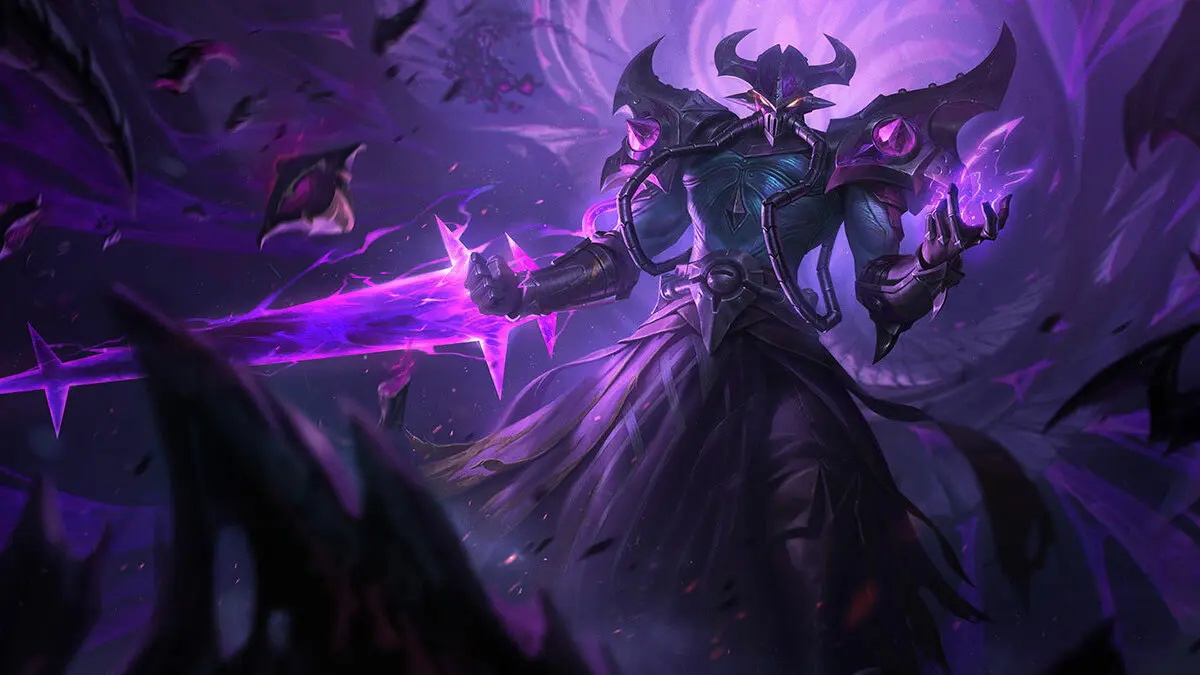
Back in 2018, Riot Games shipped Patch 8.13 for League of Legends with a curious change to Kassadin. The patch notes listed a single-point adjustment to Nether Blade, his W ability: mana cost increased from 0 to 1.
On the surface, this looks like nothing. One mana point is pocket change in a game where champions regularly burn hundreds of mana in teamfights. But in League of Legends‘ backend systems, the difference between zero and one is surprisingly important.
A zero-mana cast is treated differently than a mana-spending cast. The game engine checks whether abilities actually consume resources before triggering certain interactions. That one-point cost means Nether Blade now counts as a proper spell cast for items like Tear of the Goddess and its upgrades, which historically stack based on mana expenditure.
Nether Blade is Kassadin’s empowered auto-attack ability. He activates it on demand to deal extra magic damage and restore mana on hit. It’s a core part of his trading pattern and last-hitting toolkit.
The one-mana cost also creates a hard floor. Kassadin can’t activate Nether Blade at zero mana anymore. In rare late-game scenarios where he’s spammed Riftwalk repeatedly and bottomed out his mana pool, that single point can actually prevent a cast.
Riot never publicly explained why they made this change. The most likely reason is interaction consistency. Many League abilities that started as “free” casts eventually got token costs to prevent weird edge cases with stacking mechanics or to standardize how the engine handles resource-based champions.

