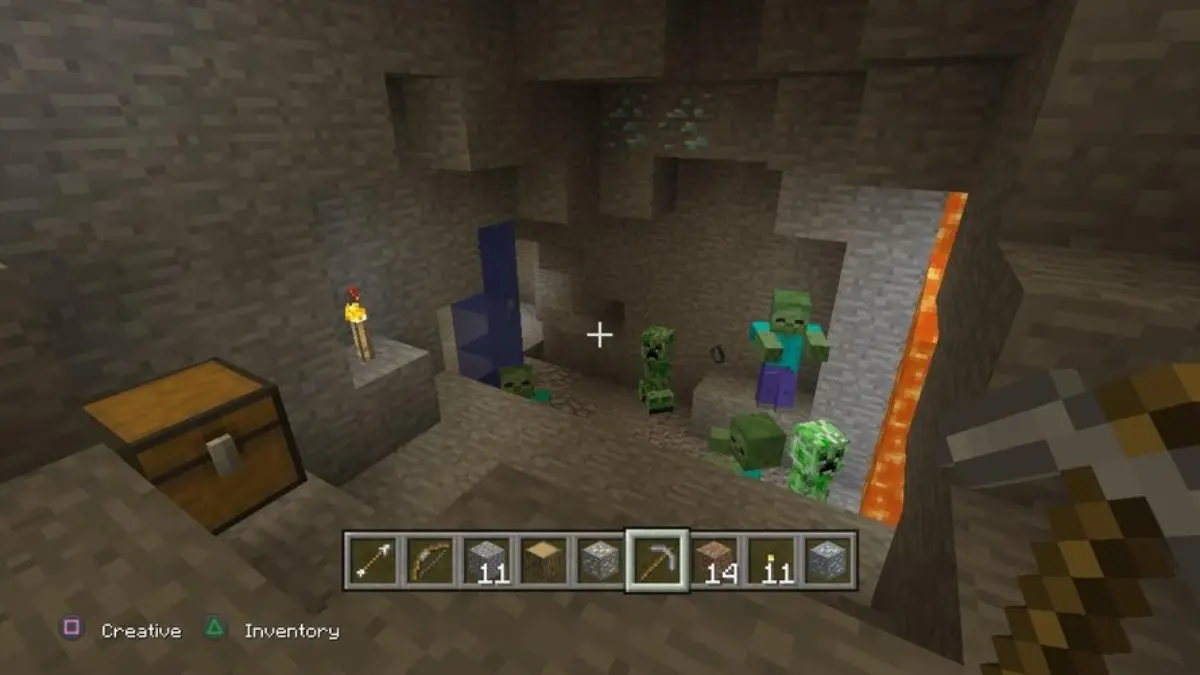
An unverified source code repository claiming to contain Minecraft Legacy Console Edition has surfaced online. While initially described as PS3 Edition source code, the leak appears to cover far more ground than a single platform.
Build configuration files show targets for PS3, Xbox 360, PS Vita, PS4 (Orbis), Xbox One (Durango), and even a Windows64 debug build. This suggests the repository contains a big chunk of the multi-platform codebase that 4J Studios maintained for legacy console versions before Microsoft consolidated everything into Bedrock Edition.
The build appears to date from 2014, roughly aligning with the TU18 update era. Players familiar with console edition update history note the code includes villager trading but lacks horses and battle minigames, placing it in that specific timeframe.
What makes this different from typical game leaks is that it’s actual source code, not decompiled binaries. Java Edition has been easy to decompile for years, but Legacy Console Edition ran on a completely separate codebase that hasn’t been accessible until now. Source code includes build scripts, platform abstraction layers, and development tools that decompiled versions simply don’t have.
Someone got it working
At least one person has already compiled the Windows64 debug build and confirmed it runs on PC. The catch? It requires a controller to play and has no audio. That makes sense for a debug build not intended for public release.
The real-world implications go beyond novelty PC builds. Having source code enables preservation work, potential bug fixes, and deeper understanding of how Minecraft‘s console versions were architected. Building for actual consoles would still require proprietary SDKs from Sony and Microsoft, but emulation or PC ports become more feasible.
Legacy Console Edition was developed separately from both Java and Bedrock editions. These versions ran on PS3, Xbox 360, PS Vita, Wii U, and early Xbox One and PS4 before those platforms transitioned to Bedrock. Microsoft eventually phased them out in favor of the unified cross-platform version.

