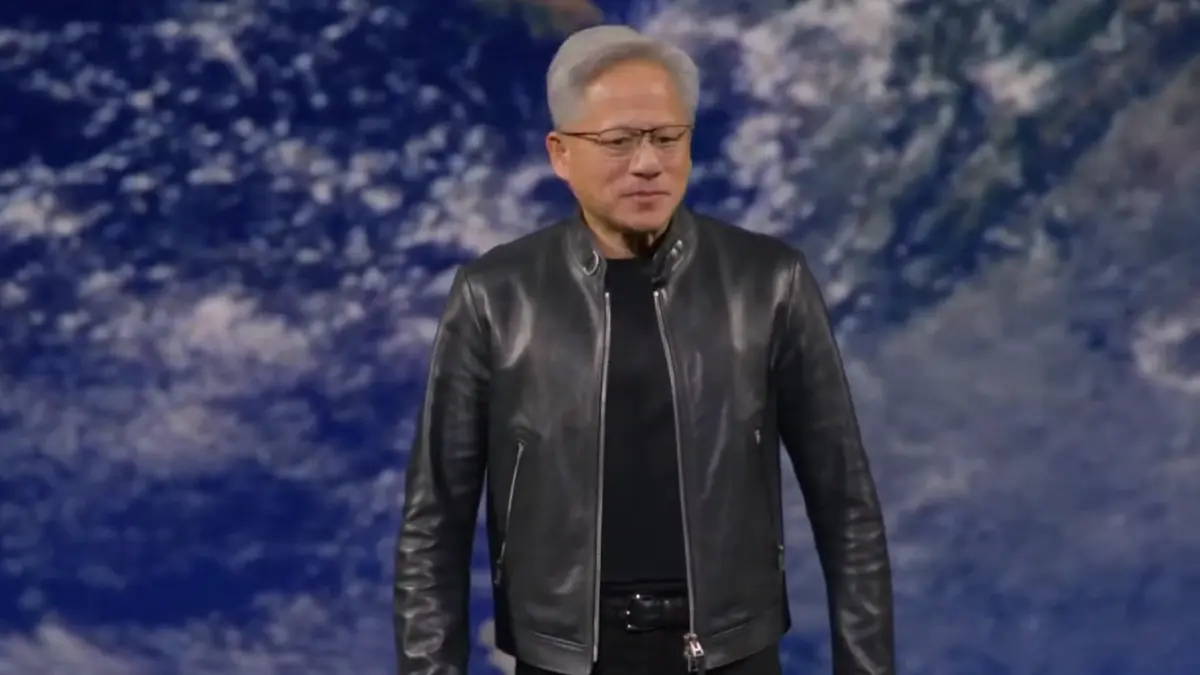
Nvidia CEO Jensen Huang just told gamers they don’t understand DLSS 5. In his interview with Tom’s Hardware editor-in-chief Paul Alcorn, Huang responded to mounting criticism of the newly revealed technology with a blunt statement: “Well, first of all, they’re completely wrong.”
The pushback comes after Nvidia showcased DLSS 5 demos that drew immediate negative reactions. The company presented footage from multiple games including what appears to be Resident Evil 9, Starfield, Hogwarts Legacy, and FIFA, plus Nvidia’s own internal demo scene called “Zorah.” Many viewers said the results looked overly smoothed and artificial.
Huang isn’t arguing about whether people like how it looks. His beef is with what people think DLSS 5 actually is. Critics have been calling it a post-processing AI filter that sits on top of finished frames. Huang says that’s wrong.
“This is very different than generative AI; it’s content-control generative AI,” Huang explained. “That’s why we call it neural rendering.”
He doubled down on the technical distinction, claiming DLSS 5 operates at the geometry level rather than as a final image overlay. According to Huang, this makes it fundamentally different from the kind of post-processing effects gamers are familiar with.
The key to Nvidia’s defense is developer control. Huang stressed that game studios decide how, where, and how strongly to apply DLSS 5. Developers can supposedly mask out specific objects or areas, adjust intensity, and tweak color grading. This means they could exclude character faces while applying the effect to environments, for example.
“All of that is in the control — direct control — of the game developer,” Huang said. He suggested developers could even experiment with stylized looks like toon shading or glass-like visuals.
DLSS has historically meant Deep Learning Super Sampling, Nvidia’s AI-powered performance tech. Previous versions focused on upscaling lower-resolution images, generating extra frames for higher framerates, and denoising ray tracing. DLSS 5 appears to be a departure from pure performance enhancement into visual transformation territory.
According to coverage from outlets that got hands-on time with the tech, DLSS 5 integrates with Nvidia’s Streamline SDK. The masking and intensity controls Huang mentioned are reportedly built into the system, giving developers granular options for implementation.
What we still don’t know
Nvidia hasn’t fully detailed the performance cost of running DLSS 5 or confirmed which GPUs will support it. The company also hasn’t shown clear before-and-after comparisons demonstrating restrained, targeted use versus full-strength application.
The controversy points to a branding problem. Calling this technology “DLSS 5” creates expectations that it’s the next evolution of performance-focused features. Instead, it appears to be something closer to an optional visual enhancement layer with AI under the hood.

