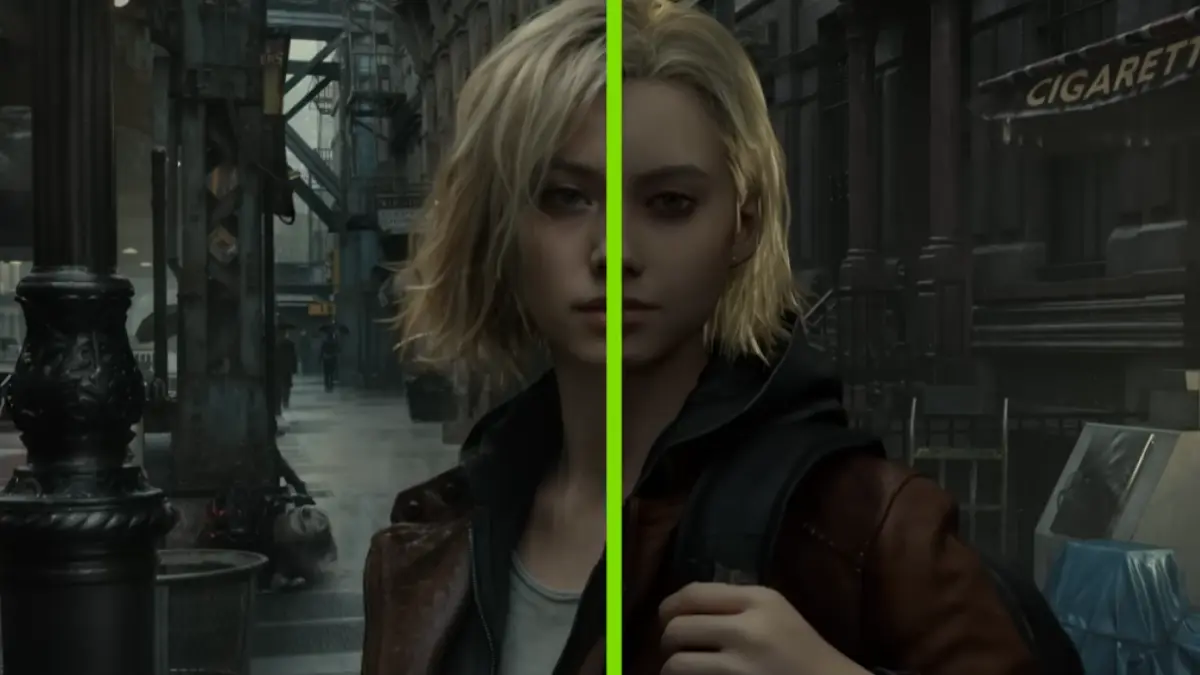
Nvidia demonstrated a new DLSS 5 capability that goes well beyond traditional upscaling. Demo footage shows the tech dramatically altering character appearances and scene lighting in ways that look more like an Instagram filter than a performance feature.
The demos included scenes from multiple games where faces changed noticeably when DLSS 5 was toggled on. In one Resident Evil Requiem clip, a character named Grace appeared to have different facial features across shots. An EA Sports FC demo featuring footballer Virgil van Dijk showed even more dramatic changes, with viewers noting the player model became harder to recognize.
DLSS has historically worked by using AI to upscale games from lower resolutions while maintaining image quality. The technology analyzes frame data including motion vectors to reconstruct a sharper image without the performance hit of native rendering.
This new photoreal mode does something different. Beyond resolution, it appears to reconstruct lighting, smooth skin texture, and alter facial details in ways that look generative rather than reconstructive.
Demo footage showed shadows disappearing in certain scenes. A hat shadow across a character’s face vanished when DLSS 5 was enabled. Building shadows on streets reduced or disappeared entirely. Some lighting changes looked cleaner, but others raised questions about whether the system was overriding intended art direction.
Faces showed the most controversial changes. Characters appeared to get smoother skin that resembled makeup application. Facial features shifted enough that some viewers questioned Nvidia’s claim that the tech only changes lighting and not geometry.
Background elements also morphed during motion. Viewers spotted what they described as typical AI artifacts, including warping clothing patterns and occasional vehicle distortions in moving shots.
Nvidia stated that developers have full control over the effect through the SDK. The controls include intensity sliders, color grading options, and masking tools that let developers exclude specific objects or screen areas from the effect.
The company emphasized that DLSS 5 uses game data like color information and motion vectors, distinguishing it from a simple post-process filter. This anchors the output to the underlying 3D content rather than applying blind adjustments.
The key concern is temporal consistency. Since the tech appears to reconstruct details generatively, it remains unclear whether a character’s face would look the same each time the camera returns to them. Traditional DLSS aims for stability across frames, but this photoreal mode’s changes seem more variable.

