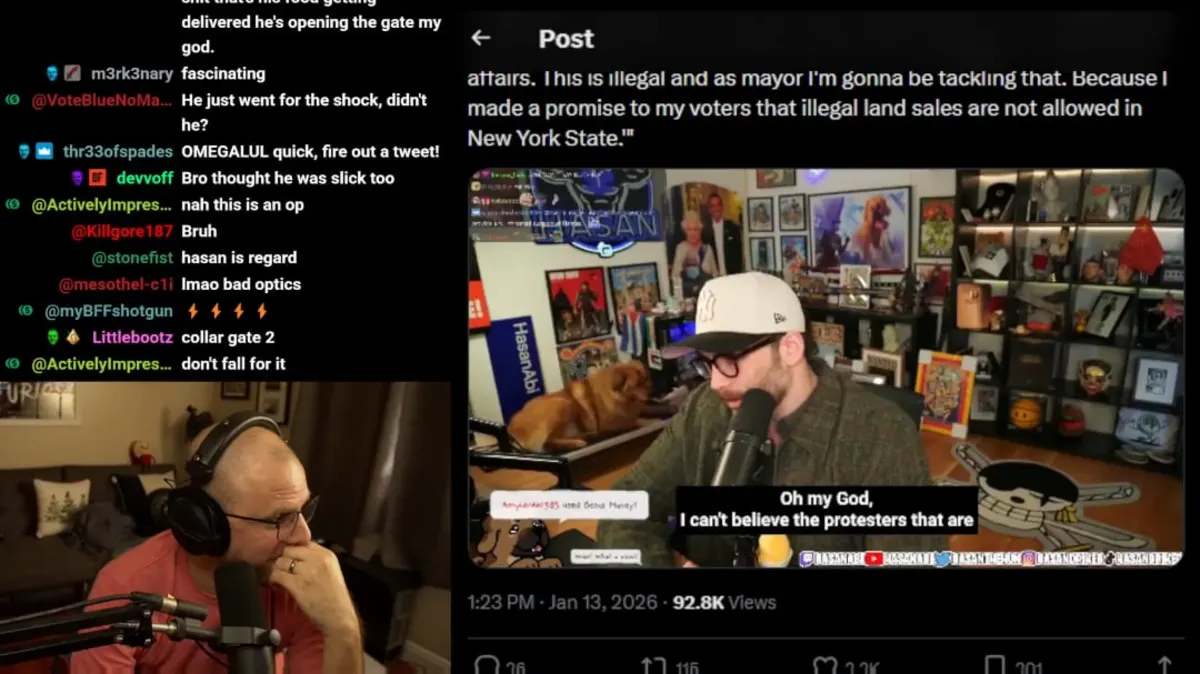
Streamer Hutch was analyzing a clip from Hasan Piker’s livestream and noticed how he still manages his dog Kaya during broadcasts. The footage shows Kaya beginning to stand up from her designated mat in the background before Hasan makes a quick reaching motion toward something off-screen on his desk. Kaya immediately stops and returns to the mat.
The clip doesn’t clearly show what Hasan touched or whether he pressed any button. No remote control is visible in his hand and the collar on Kaya isn’t shown in close detail. But the timing has viewers questioning whether he used a remote training collar to cue her back to position.
All of this after collargate? What seemed to have almost blown over, is now being brought back into the spotlight after this current clip gained traction.
The broader concern centers on Kaya’s placement during streams. Viewers claim the full broadcast shows Kaya remaining on a small mat for extended periods, with some asserting she stayed in that spot for over four hours.
Place training is a common obedience exercise used in many training programs. It helps dogs learn impulse control and settling behaviors. The controversy emerges when viewers question whether the duration is excessive or whether the compliance is maintained through aversive correction rather than positive reinforcement.

