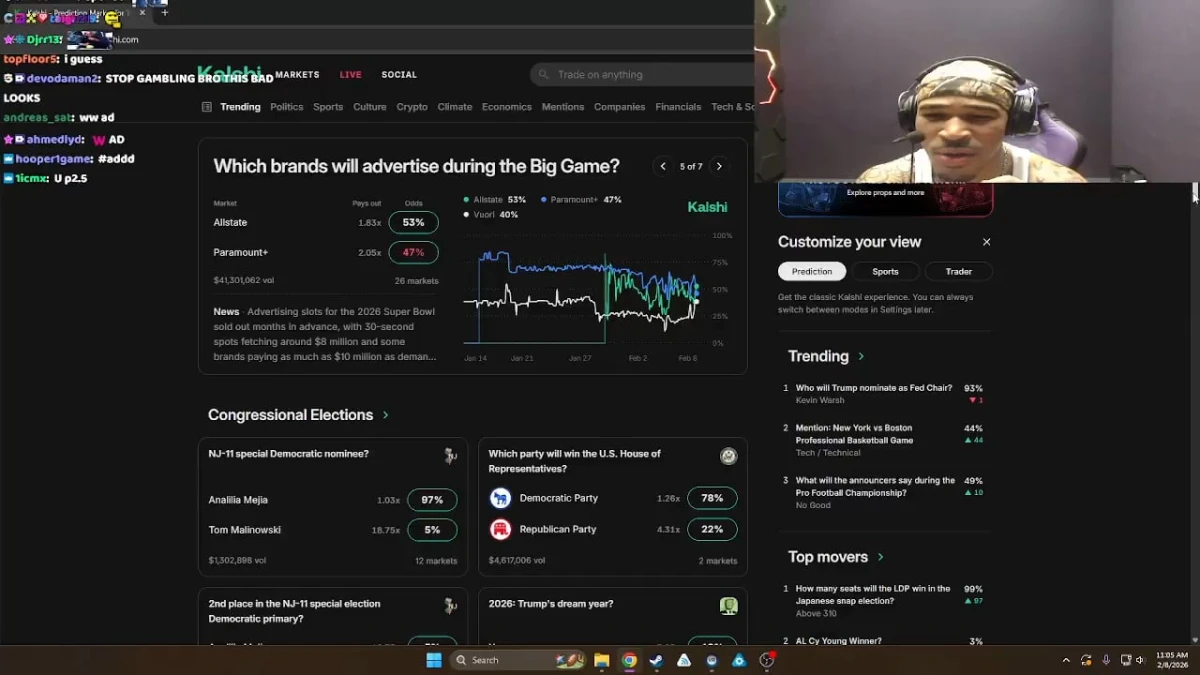
Plaqueboymax went live from Twitch headquarters this week to promote Kalshi, a prediction market platform. The stream immediately drew fire from viewers who questioned whether the promotion was properly labeled as sponsored content.
Clips from the broadcast show the streamer promoting Kalshi while at Twitch HQ. Multiple viewers in chat asked about ad disclosure, pointing out they couldn’t see any “#ad” tag or sponsorship notice. Those questions didn’t last long.
Moderators went to work issuing permanent bans to people raising concerns about disclosure. The bans targeted users specifically asking whether the stream was sponsored or complaining about the lack of clear labeling.
The disclosure situation remains murky. While some viewers insist no sponsorship label appeared during key moments of the promotion, the full VOD includes verbal disclosure at some point. The difference matters because FTC guidelines require sponsorships to be clearly marked when they occur, not just mentioned once and forgotten.
Kalshi operates as a regulated prediction market under CFTC oversight. Users bet on real-world outcomes by taking yes-or-no positions on events. The platform has ramped up marketing recently, appearing in TV ads and across social media. To many viewers, it looks and feels like gambling, even if the regulatory classification differs.
The FTC requires influencers to clearly disclose paid partnerships. For livestreams, that typically means verbal mentions, “#ad” in the title, on-screen labels, or all three. The disclosure needs to be obvious and repeated, not buried or easy to miss.
Streaming a sponsored segment from inside Twitch’s own building added an extra layer of awkwardness to the situation. Whether or not disclosure appeared somewhere in the VOD, the optics of promoting a gambling-adjacent product from platform headquarters while banning critics didn’t land well with the audience.

