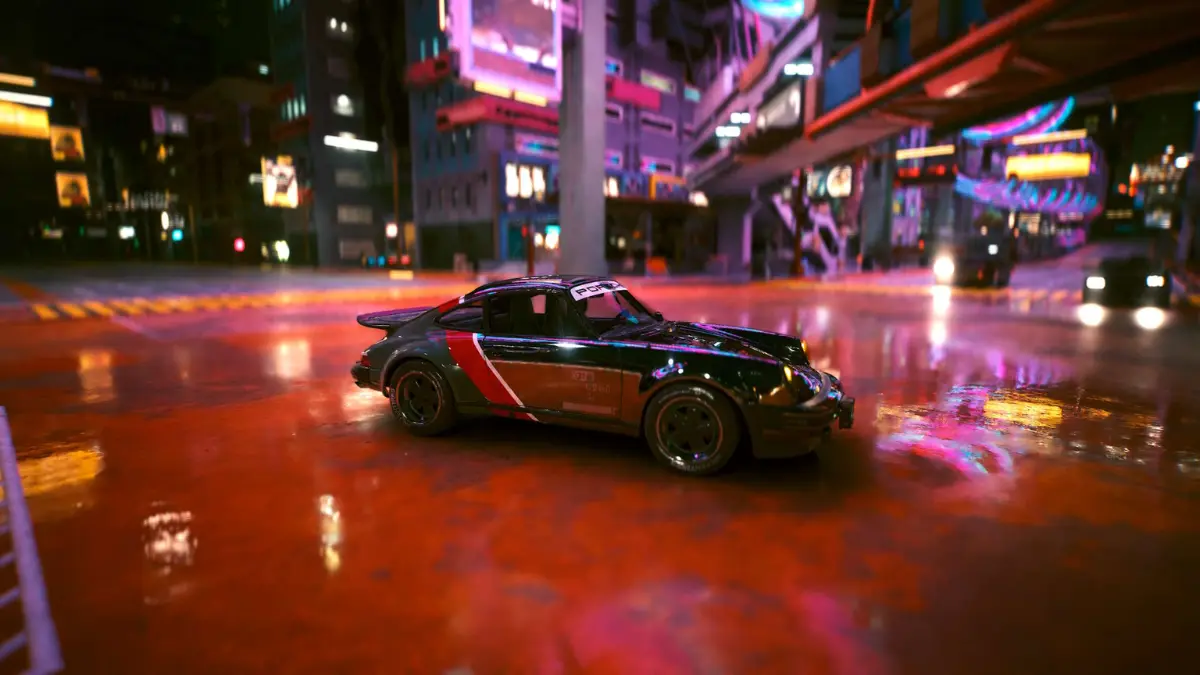
While the core idea behind the technology is 45 years old, the phrase “ray tracing” has only really lived in mainstream gamer brainspace for less than a decade, going back to the 2018 launch of Nvidia’s first RTX graphics cards.
That said, the way gamers think about it hasn’t evolved much: prettier graphics, lower frame rates, maybe a shiny puddle or two. That’s not exactly wrong, but it’s also far from the whole picture. There’s a lot more going on that could genuinely improve the player experience, or is already doing so.
However, with Nvidia now far more focused on AI number-crunching than championing rendering techniques, developers have largely been left to justify ray tracing to consumers on their own. And frankly, they’ve been doing a pretty poor job.
That’s… not ideal. Especially seeing how public scrutiny of the tech is steadily ramping up now that more games are starting to remove the option to turn ray tracing off entirely.
So, let’s try to pick up the slack and lay out a few reasons why you should care about ray tracing beyond just “graphics go brr.” Here are seven of them.
1. Improved visibility and spatial awareness
One of the most underrated perks of ray tracing is that it actually helps you see better. Proper global illumination, soft shadows, and real ambient occlusion don’t just make scenes look fancier but make them more readable.
Instead of almost everything being lit with an evenly applied light—unless you spend countless resources on baked-in lighting, but we’ll get to that in a bit—geometry finally behaves like it has a place in the world. Corners look like corners, ledges read as ledges, and you can tell where objects sit in space without squinting at muddy shading.
RT shadows and ambient occlusion especially do a lot of heavy lifting here. Because they’re grounded in the scene instead of painted on with approximations, characters and objects don’t blend into the background as much. Enemy silhouettes can pop more clearly, depth gets easier to judge, and clutter-heavy environments feel less like a visual soup. It’s subtle, but once you notice it in a well-executed game like Control or Cyberpunk 2077, it’s hard to un-notice.
2. Shorter development times than baked-in lighting
Lightmapping, or light baking, has been a necessary evil in game development for years. Artists spend ages setting up lightmap UVs, tweaking coefficients, and then sitting through bake times that can halt iteration even when they’re fairly short.
Change a prop, move a light, or rework a room layout, and you’re right back to staring at a progress bar—and maybe that dreaded “LIGHTING NEEDS TO BE REBUILT” message if you’re using Unreal.
Ray-traced global illumination, or RT-accelerated systems like Lumen, flip that dynamic. Designers can move lights, smash a wall, or completely re-stage a combat encounter and have indirect lighting update automatically. No more constantly rebaking the entire level just because someone nudged a doorway, added a window, or found an obscure bug requiring a slight geometry adjustment.
This could potentially save a lot of development time down the line and is already somewhat helping offset the trend of game dev cycles getting ridiculously long. There is a caveat, though: most games are still running hybrid setups, mixing baked-in data with real-time ray tracing, and tooling’s still evolving rapidly.
So, it’s not like studios suddenly have a “skip lighting pipeline” button, but with hardware and software alike getting better, we’re getting there bit by bit. As recently argued by both MachineGames and Ubisoft, the more RT takes over the rendering heavy lifting, the less old-school bake rituals will slow down development in the future.
3. Smaller install sizes and updates
If you’re not shipping giant sets of lightmaps and pre-computed shadow paths for every level variant, that’s a lot of textures you simply don’t need. As it turns out, textures are the primary driver of gargantuan game file sizes these days.
It’s not like every RT game is suddenly tiny, but the direction of travel is clear: the more lighting you compute instead of pre-bake, the leaner installs and patches can get over time because less baked-in lighting means less data in general.
4. Massively lowered technical barrier for high-end remasters
One big reason ray tracing matters long-term is that it ages better than a pile of hacks. Because it’s physically based instead of relying on scene-specific tricks, you can rerun the same scene 10 or 20 years later at higher resolution or with more samples and just get a cleaner, more accurate version of the original lighting. No broken shadow maps, glitched light probes, or weird baked artifacts to deal with.
We’re already seeing this in action with projects like RTX Remix, which can bolt modern, fully ray-traced rendering onto old DX8/9 games without rewriting their original engines. That’s how you get things like Half-Life 2 RTX or remastered Portal lighting that still look faithful, just better.
Natively ray-traced games will be even easier to remaster in the future, especially if we’re talking about unofficial remasters. So, the more RT becomes standard, the easier it is for modders to drag your favorite 2000s games into the future without waiting for official remakes.
5. More reactive worlds and other gameplay possibilities
Ray tracing and path tracing in particular could have concrete gameplay applications in the not-too-distant future. Because they are excellent at calculating arbitrary visibility cues, they could be leveraged into more realistic and fair enemy AI. Seeing realistic reflections could also become an advantage in competitive games for someone running a rig that can handle it.
Looking at what’s being done right now, there are games that already use ray tracing quite well to affect gameplay, if only indirectly. The Riftbreaker, released in 2021, is a completely different experience with RTX on. Ray-traced lighting makes its alien jungle hard to read at night, exposing players to ambushes—at least until they break out the flamethrower.
Once you’re no longer tied to baked lightmaps, you can let players and systems interact with the world more freely without sacrificing fidelity. Lighting that “just works” gives designers the freedom to build true sandboxes, instead of constantly wrangling the rendering pipeline.
The 2019 Control is one of the earliest examples of a game with highly destructible environments largely made possible by ray tracing. Remedy Entertainment loved the RT tech so much that it made it mandatory in Alan Wake 2, which ruffled some feathers. Expect to see many more high-profile ray tracing advocates in the coming years.
6. Potential energy efficiency benefits down the line
Right now, when you turn ray tracing on, your GPU doesn’t exactly sip power. In most games today, RT still means higher power draw and more heat compared to a pure raster preset.
And while this isn’t some magical “eco mode” toggle, doing ray-tracing math on dedicated RT hardware is still more efficient than faking the same level of lighting with a mess of brute-force raster tricks. That’s why Nvidia has RT Cores, AMD has Ray Accelerators, and Intel has its own RT units. As ray tracing architectures improve, the amount of lighting bang you get per your buck/watt keeps going up.
If that scientifically observed trend continues, we’ll end up with a nice side effect: high-end lighting without hair-dryer fans. Not because ray tracing magically saves power today, but because specialized RT hardware keeps getting better at doing heavy lighting work for less energy than the old bag of hacks.
7. Cross-platform consistency & easier porting
One quiet win of ray tracing is that it helps different versions of the same game look less… different.
Instead of each platform relying on its own mix of screen-space reflections, blob shadows, and clunky baked-versus-dynamic lighting compromises, a shared setup—which can be either RT-only or a rasterization-ray tracing hybrid, as recently advocated by Activision CTO Natalya Tatarchuk—tends to behave more consistently across PC, console, and even cloud builds.
That consistency will matter more as next-gen consoles and new PC GPUs lean harder into ray tracing hardware. The “lowest common denominator” for lighting is rising, which means ray tracing isn’t just about prettier screenshots but about closing the visual gap between platforms.
Back when the current console generation launched, there was even talk of ray tracing helping close the fidelity gap between high-end PCs and consoles—like in this 2020 ITMO University article. That hasn’t really materialized yet, but with newer hardware on the horizon, we could be getting closer by 2027, when the PS6 and Xbox Series X successor are expected to land.
Of course, high-end PCs will always lead in visual quality by virtue of being high-end. But ray tracing levels the playing field enough that platform differences may soon feel more marginal, while also making multi-platform development that much more standardized.
What about path tracing?
Ray tracing is already a big enough topic on its own, but it also has a louder, needier cousin: path tracing.
Very short version: ray tracing usually means firing a limited number of rays for specific effects (shadows, reflections, AO, maybe one or two light bounces) in order to simulate just the light that’s reflected straight into the camera. It’s also often mixed with rasterization tricks for more visual eye candy on limited hardware.
Path tracing, on the other hand, goes further. It simulates entire light paths with many more bounces, aiming to recreate full “real world” lighting as a unified global illumination system. That’s the kind of lighting you see in Pixar-style offline renders and in a handful of super demanding “Overdrive” or RTX Remix modes on PC.
Right now, path tracing is still pretty niche in gaming because the hardware bill is extreme, and the performance trade-offs are rough for most players. It shows up in a few showcase titles and remasters, and usually as an optional “are you really, really sure?” graphics preset, not the default way games are lit. But conceptually, it’s the same family of tech, just turned up to eleven.
And that’s the key point: almost everything you can say in favor of ray tracing also applies to path tracing. Better readability, less reliance on hacks, more future-proof visuals, easier high-end remasters, more consistent lighting across platforms, and long-term gains in efficiency as hardware catches up—all of that still holds.
Whether you’re talking about “practical” RT shadows in a current-gen game or full path tracing in a PC melter, you’re still moving away from smoke-and-mirror tricks and toward lighting that behaves like actual light.
The main issue is that right now, the hardware tax is still so high that games have to rely on a different blend of smoke and mirrors to deliver usable frame rates, namely, AI frame generation. But that’s a whole other can of worms better opened on another day.
Bottom line, if you care about games aging gracefully, looking coherent across devices, and eventually doing cooler things with light than just shiny puddles, ray tracing—and, down the line, path tracing—are absolutely worth embracing. Yes, shinier graphics are still the main selling point, but the real story here is that this tech is slowly rewriting how games are made and how they work, not just how they look.
Ray tracing is the future, whether we like it or not
As far as graphics are concerned, if you want to drop a paycheck on a new GPU largely due to ray tracing, that’s your prerogative. If you want to get mad that Indiana Jones and the Great Circle literally doesn’t work without an RT GPU, but almost everything else still runs fine on your GTX 1080, that’s fine as well.
The key takeaway, though, is that after seven years of gradual adoption, ray tracing in gaming is now on track to become largely mandatory in the not-too-distant future. Consoles already have fixed-function RT hardware, next-gen machines will lean into it even harder, and PC GPUs without any RT acceleration are slowly aging out of the target spec.
In other words: if you don’t already have RT-capable hardware, you will have to pony up for it sooner rather than later. The good news is that you’re not just paying for shinier puddles. All the stuff we’ve talked about—better readability, faster iteration for devs, smaller installs and patches, easier remasters—is bundled into that same “RT tax” you’re going to pay.
You can absolutely keep prioritizing high-FPS raster modes while games keep offering them, but when you do eventually upgrade, it’s worth seeing ray tracing as core infrastructure for how games are built and work, not just a vanity toggle for how they look. That shift in mindset is really the point: RT’s the future either way, so you might as well understand the extra value you’re getting beyond “graphics go brr.”
