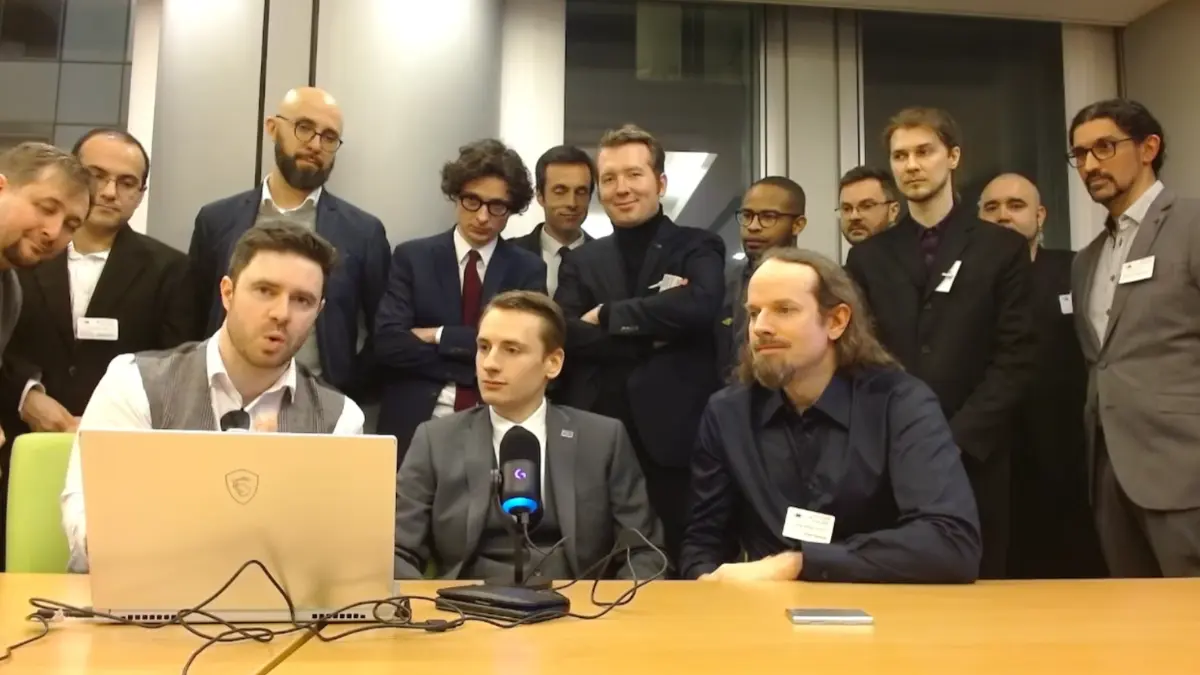
The Stop Killing Games campaign held a press conference at the European Parliament in Brussels this week. The event brought gaming consumer advocacy into formal EU political channels.
Ross Scott from Accursed Farms led the presentation alongside YouTuber Josh Strife Hayes, who moderated the session. Scott is best known for his long-running Freeman’s Mind series and has been the driving force behind Stop Killing Games since its launch.
The press conference focused on a specific consumer problem. When publishers shut down online servers or authentication systems, games that people purchased can become partially or completely unplayable. The campaign argues this raises questions about what it means to “buy” a game if companies can remotely disable it later.
The meeting drew bipartisan support from Members of the European Parliament. The event was livestreamed publicly and positioned as a policy briefing rather than just advocacy.
Stop Killing Games doesn’t target vintage game preservation broadly. The campaign specifically addresses modern games with always-online requirements, central authentication servers, or live-service backends that can’t function once company support ends.
The issue affects various types of games. Single-player titles with forced online checks become unplayable. Multiplayer games with no community server support die completely. Even games with offline content can be bricked by authentication systems.
Publishers typically resist mandates around end-of-life support. Common industry concerns include engineering costs, security risks from releasing server code, licensing complications with music or brand deals, and privacy issues with third-party server operation.
Potential solutions discussed in the broader debate include offline patches that remove online checks, releasing server binaries for community hosting, peer-to-peer fallback systems, or requiring publishers to disclose sunset plans at launch.
The EU has shown interest in digital consumer rights and the durability of digital goods. Questions include what obligations are reasonable for publishers, how to protect smaller studios from excessive burdens, and whether games qualify as cultural works worth preserving.
Josh Strife Hayes’ involvement as moderator highlighted the campaign’s effort to present a polished, accessible case to lawmakers. His reputation for clear explanations of gaming industry issues made him a natural fit for translating technical problems into policy language.

