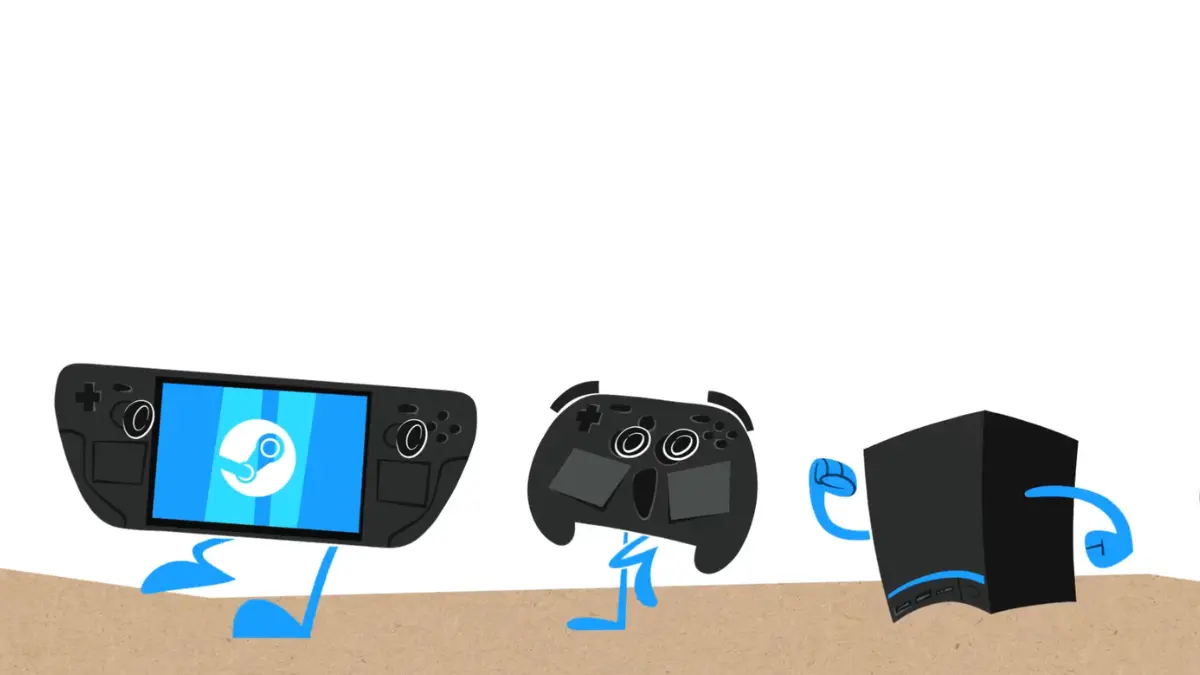
Valve published a “Steam Hardware: Launch timing and other FAQs” update addressing questions about its upcoming hardware lineup. The company reaffirmed its goal to ship all three products in the first half of 2026 but said it can’t announce concrete pricing or exact launch dates yet.
The reason is component market instability. Valve specifically called out memory (RAM) and storage as the problem areas. Both markets are experiencing rapid price fluctuations and supply constraints that make it risky to lock in public pricing.
“The limited availability and growing prices of these critical components mean we must revisit our exact shipping schedule and pricing (especially around Steam Machine and Steam Frame),” Valve stated in the FAQ. The company promised to share updates as soon as plans are finalized.
The three products in question are the Steam Machine, Steam Frame, and a new Steam Controller. The Steam Machine is Valve’s living room PC device designed to compete with traditional consoles. The Steam Frame appears to be VR-focused hardware. The Steam Controller is a new revision of Valve’s discontinued controller that originally launched in 2015.
Valve’s FAQ singled out the Steam Machine and Steam Frame as the products most impacted by component pricing. This makes sense given these are full hardware devices with substantial memory and storage requirements. The controller presumably uses fewer volatile components.
The component crunch isn’t unique to Valve. RAM and SSD prices have been climbing across the PC hardware market as AI and data center demand eats up production capacity. Consumer electronics manufacturers are competing for the same memory chips that tech companies need for servers and AI training hardware.
The FAQ also addressed controller compatibility. Valve confirmed the new Steam Controller will work with any game compatible with the Steam Overlay. This means non-Steam games will likely need to be added to Steam to take advantage of Steam Input features like custom button mapping and community controller layouts.
Valve has successfully launched hardware before despite market challenges. The Steam Deck faced component shortages during its 2022 launch but eventually scaled to meet demand. The company used a reservation queue system to manage early supply constraints.

