November is a key month for the video games industry, with Black Friday and Cyber Monday being vital dates in a month already rife with holiday shopping. However, physical games—as well as physical hardware—caught the short end of the stick, seeing a massive hit in terms of sales.
The AAA games industry has been at war with physical retailers like GameStop for years, with used game sales being a particular sore point for publishers. Combined with a general disdain for ownership in general, a need to control the customer’s product post-purchase has formed in the industry, much to the chagrin of both physical game stores and players.
Given the constant attacks on physical game sales (from old-hat tactics of including a one-time code for online play in new releases, to the recent expansion of online game subscription services) it’s scarcely surprising that the physical market is showing its wounds.
In a thread on Bluesky, Circana’s senior director Mat Piscatella went over some of the November sales statistics just released by the company. One of the big stats to come from this commentary is a 14% decrease in physical game sales compared to November 2024, marking the a record low since tracking began in 1995.
Interestingly, hardware isn’t getting off easy either. Xbox console sales plummeted roughly 70%, PlayStation 5 hardware fell approximately 40% compared to November 2024, and Switch/Switch 2 sales are down 10%. Overall, the gaming hardware market has suffered a 27% decline, the worst since 2005.
Physical gaming is being killed off
This drop in physical sales is nothing surprising, as the industry has consistently thrown the sector under the bus. A general fall in sales could be pinned on pricing (especially with a new push for $80 games, right after $70 has become cemented), and that fall has mostly been felt across physical games due to the diminished value of physical copies.
Not only are digital downloads more convenient, accessible straight from a digital library and purchasable from home, but many physical copies now require a download of their own. In addition, physical copies now regularly come with codes instead of material inserts, which has even extended to top-shelf collector sets. Add to that how some console variants have no disc drive at all now, and it’s clear to see why physical gaming has been hit so hard.
Moreover, many physical game stores are on their last legs. In the UK, GAME used to dominate the high street, but have since been hugely reduced in presence, with the entity being bought out by Sports Direct, seeing many outlets stuck inside larger Sports Direct shops.
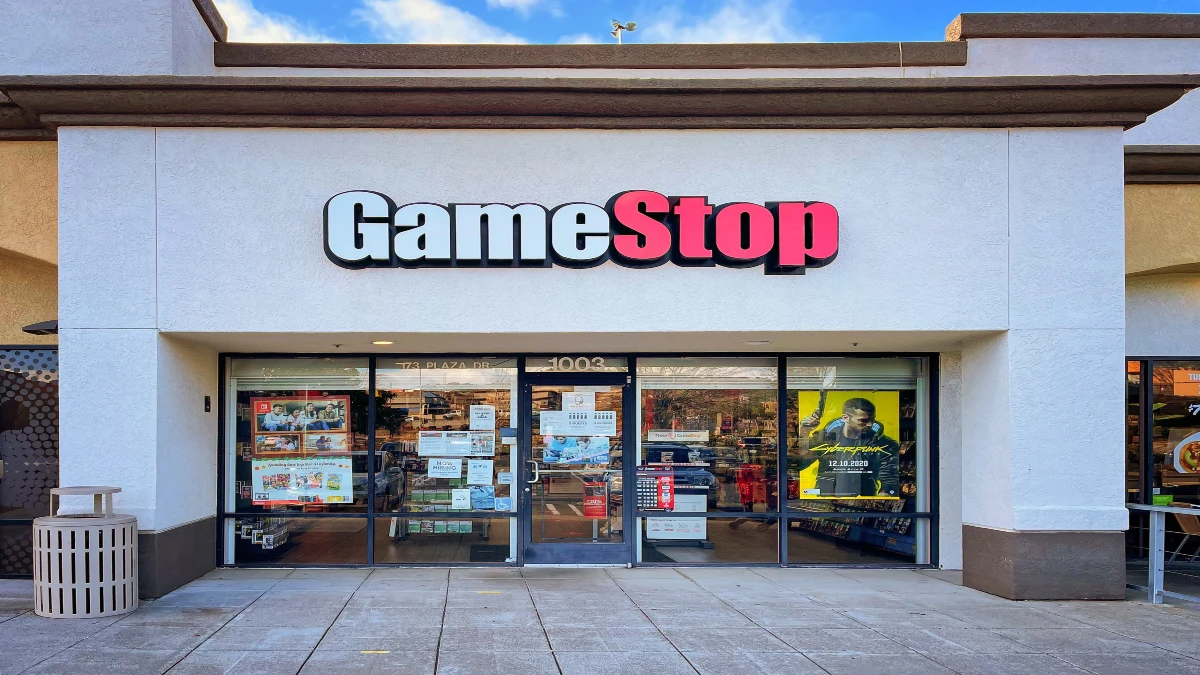
On the other hand, the survival of GameStop is now pinned to the Pokémon TCG, with the recent upswing in card sales granting the chain a second wind. However, this does mean that physical game and console sales have slipped into the background, something that’s also happened in stores like GAME—which are now more focused on merch.