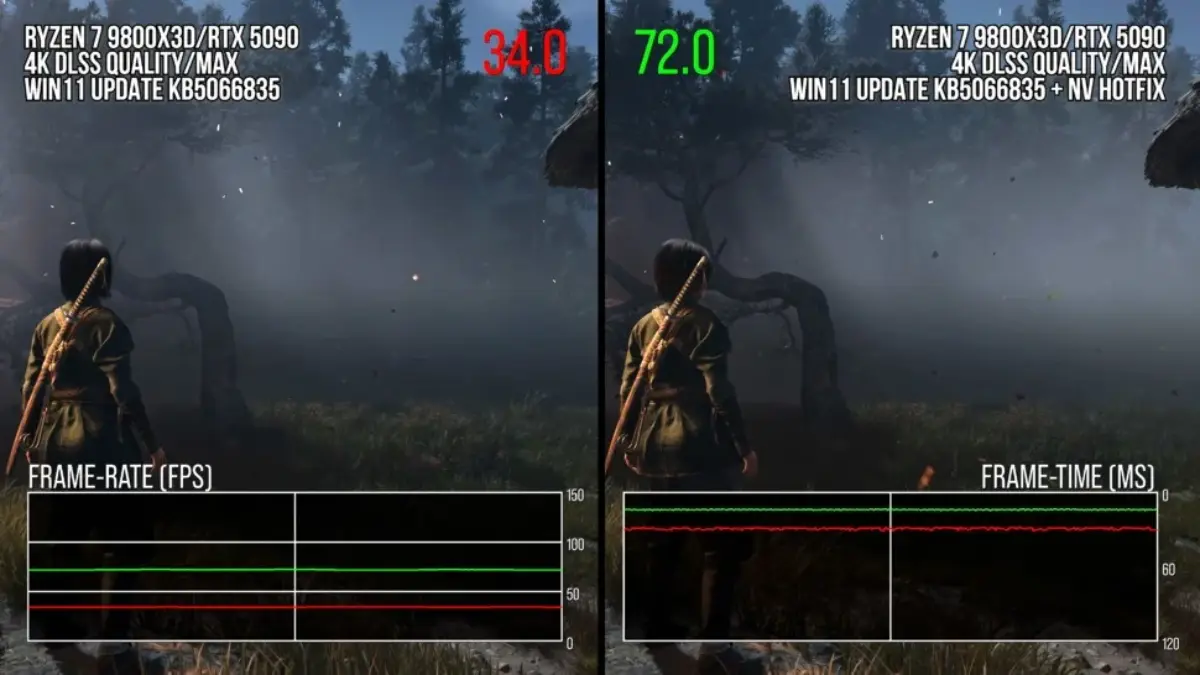
A recent Windows 11 cumulative update has tanked gaming performance on systems running Nvidia graphics cards. Digital Foundry and players are reporting frame rates cut by roughly 50% in affected titles after installing the update.
Assassin’s Creed Shadows has become the poster child for this issue. Multiple users report the game became nearly unplayable after the update. But AC Shadows isn’t alone. League of Legends players have experienced massive frame rate drops and system freezes that never happened before.
The problem affects Windows 11 systems across versions, including the 24H2 build. It appears specific to Nvidia GPUs. At least one AMD Radeon user reported zero performance issues with the same Windows update.
Not all games are affected. Some titles run fine on the same hardware after the update. This suggests the bug only triggers under certain engine configurations or API conditions.
Nvidia has released a driver hotfix that restores performance. But there’s a catch. The fix only exists in a beta driver right now. Users who want the most stable experience have to either install beta software or wait for Nvidia to roll the fix into an official Game Ready driver release.
The company took roughly a month to push out the hotfix. For affected players, that meant weeks of degraded performance or avoiding certain games entirely.
Before the hotfix appeared, the main workaround was simple but annoying: uninstall the Windows update. Many AC Shadows players have been doing exactly that for weeks. The official game forums were full of posts telling people to remove the update.
Some users report problems beyond just frame rates. Multiple players experienced system instability after the same update. One user’s PC repeatedly failed to boot and entered repair diagnostics. It took multiple power cycles to get the system running again.
Advanced users have found ways to protect themselves. Some block Windows feature updates through Group Policy Objects while allowing security patches through. Others stick with Windows 10 or LTSC builds that receive fewer major updates.
What this means for PC gaming
Windows cumulative updates can modify low-level graphics components, DirectX runtimes, and kernel behavior. Even small changes can create unexpected conflicts with GPU drivers or specific game engines. Games like Assassin’s Creed use aggressive rendering techniques and heavy CPU-GPU workloads. They often hit edge cases that simpler titles don’t encounter.
This situation shows the tension between rapid OS update cycles and gaming stability. Microsoft pushes updates for security and features. But those updates can break things that worked perfectly the day before.
For now, affected users have two options. Install Nvidia’s beta hotfix driver with the usual caveats about beta software. Or roll back the Windows update and lose whatever fixes Microsoft bundled in.

