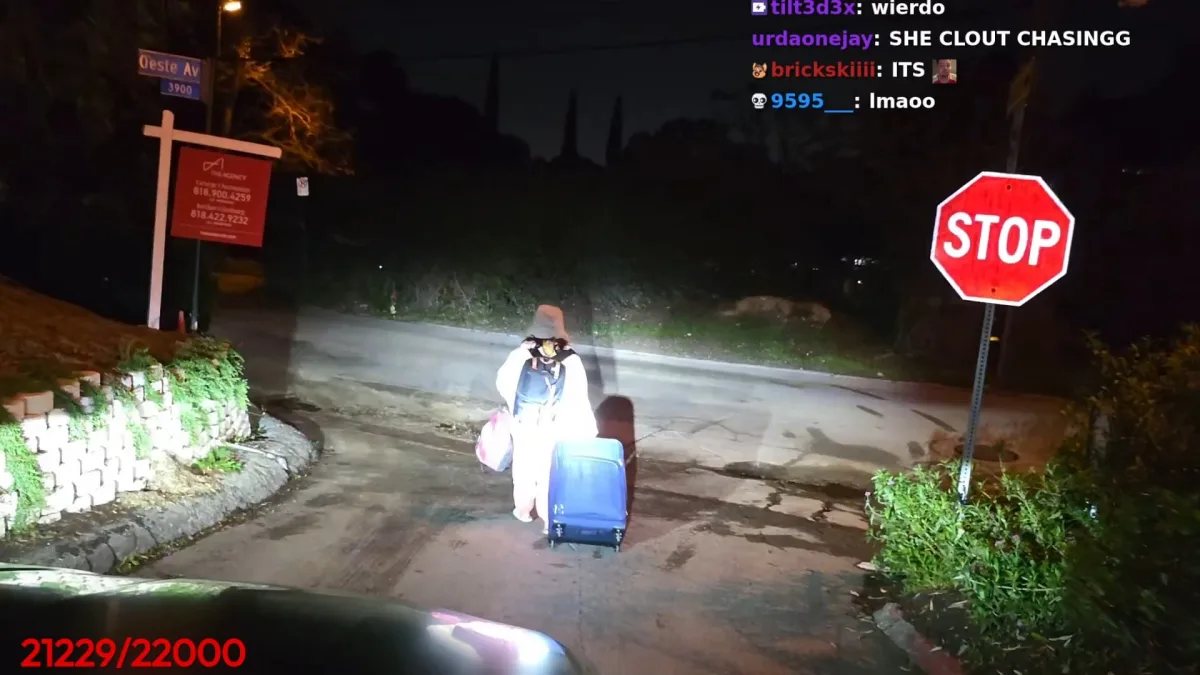
A woman who repeatedly appeared on Stable Ronaldo‘s IRL broadcasts escalated her behavior by showing up at a residence associated with Ron and FaZe Lacy with luggage in tow.
In a clip that spread quickly across social media, Lacy filmed himself confronting the woman outside. She arrived with bags, suggesting she intended to stay or had nowhere else to go. When Lacy asked if she was mentally ill, she answered “yes” without hesitation while smiling throughout much of the interaction.
The woman claimed she had been kicked out of her housing and blamed the streamers for “making it easy” to find them. She told Lacy “you need to understand, I did not want to be here” despite having booked transportation to reach the location and bringing multiple bags with her.
This wasn’t the first encounter. The day before, viewers reported seeing her follow Ron through Hollywood during his IRL stream. She allegedly approached random women Ron spoke to on the street, telling them he was a “rapist” while simultaneously claiming he was her boyfriend.
IRL streaming creates unique vulnerabilities for content creators. Unlike traditional streaming from a fixed setup, IRL broadcasts show street signs, landmarks, and recognizable locations in real time. Determined viewers can piece together where streamers live from background details, nearby businesses, and repeated filming locations.
Many established streamers have moved away from large shared houses like the one from FaZe Clan precisely because of incidents like this. Creators including Valkyrae, Fuslie, and others have relocated to apartment buildings with doormen and restricted access. Some maintain armed security at their properties.
When content becomes a safety risk
The streaming community has debated whether Lacy should have filmed the interaction at all. Giving stalkers attention, even confrontational attention, can reinforce their behavior. Some viewers warned that engaging with her on camera might have made the situation worse by validating her efforts to reach them.
Legal experts and those familiar with stalking cases recommend immediately involving law enforcement to create a paper trail. Restraining orders require documented evidence of repeated unwanted contact. In California, if someone appears to be a danger to themselves or others due to mental illness, authorities can place them on an involuntary psychiatric hold for evaluation.
The woman’s acknowledgment of her mental illness complicates but doesn’t excuse the behavior. Mental health issues explain why someone might engage in stalking, but don’t remove the need for legal intervention and boundaries. Both treatment and protection orders often work together in these situations.

