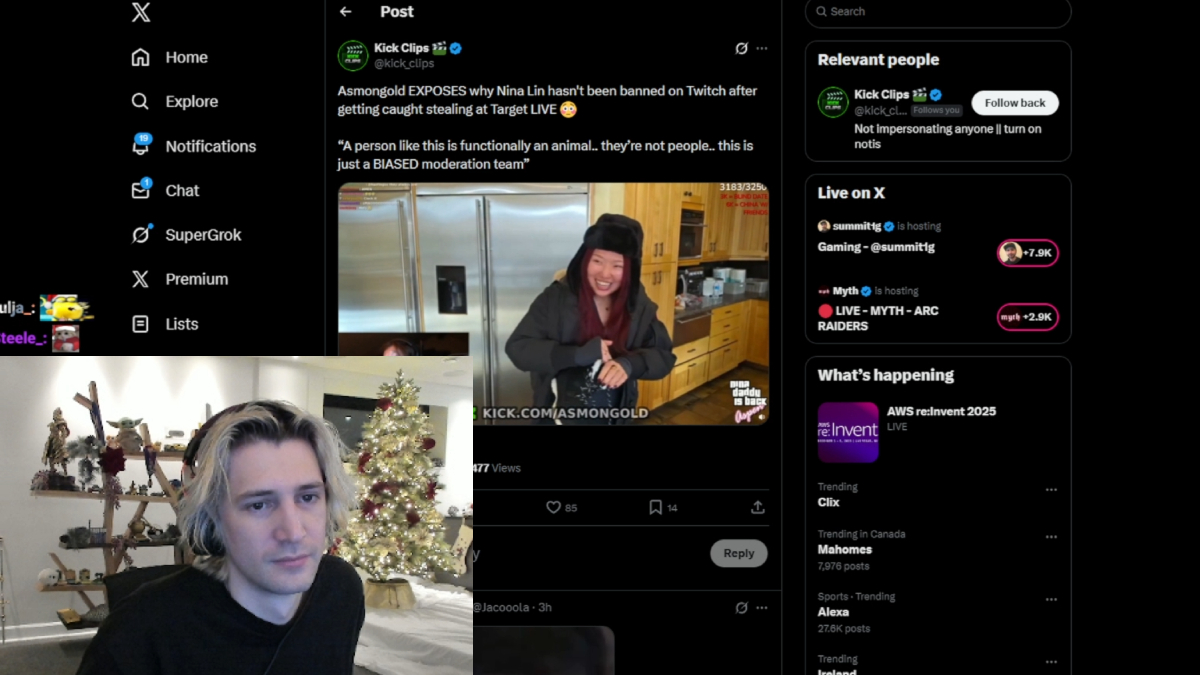
Twitch streamer Nina Lin admitted to shoplifting from Target during a recent broadcast. The admission caught the attention of xQc, who criticized what he sees as a dangerous disconnect between platform rules and real-world consequences.
In the clip, Nina Lin addresses stealing items from Target, including steaks and other goods. Despite reportedly earning six figures as a content creator, she frames being caught committing the thefts casually, rather than as a serious confession. Streamer xQc then reacted to the footage on his own stream with sharp criticism.
“I wonder if some of these streamers even realize how protected they are on Twitch,” he said. His point was clear: given the risk to their livelihoods, many creators seem to think platform enforcement is the only risk they face. Some creators feel safe admitting to crimes on stream because they’re more worried about Twitch bans than legal consequences.
Later, xQc pointed out that while Twitch might not take immediate action, actual law enforcement and retailers certainly can. While admitting to ongoing theft on camera risks a platform ban, as Nina Lin has since discovered, it also creates a documented confession that companies like Target could use to press charges.
Targeting Shoplifting
When it comes to theft, Target is unique in that the company runs one of the most sophisticated loss prevention operations in retail. Their investigative teams are known for tracking repeat shoplifters over time, building cases until the total value crosses thresholds for more serious charges.
Rather than stopping someone after a single incident, Target’s more deliberate loss prevention strategy often lets repeat offenders continue stealing while gathering evidence. When they finally act, they can pursue felony charges instead of misdemeanors. That process becomes even easier if someone creates video evidence of their own crimes.
For streamers, Nina Lin’s admission ultimately raises questions about Twitch’s enforcement of its own rules. The platform’s terms of service prohibit illegal conduct, but enforcement remains inconsistent. Some creators face bans for minor speech violations while others broadcast more serious misconduct without immediate consequences.

