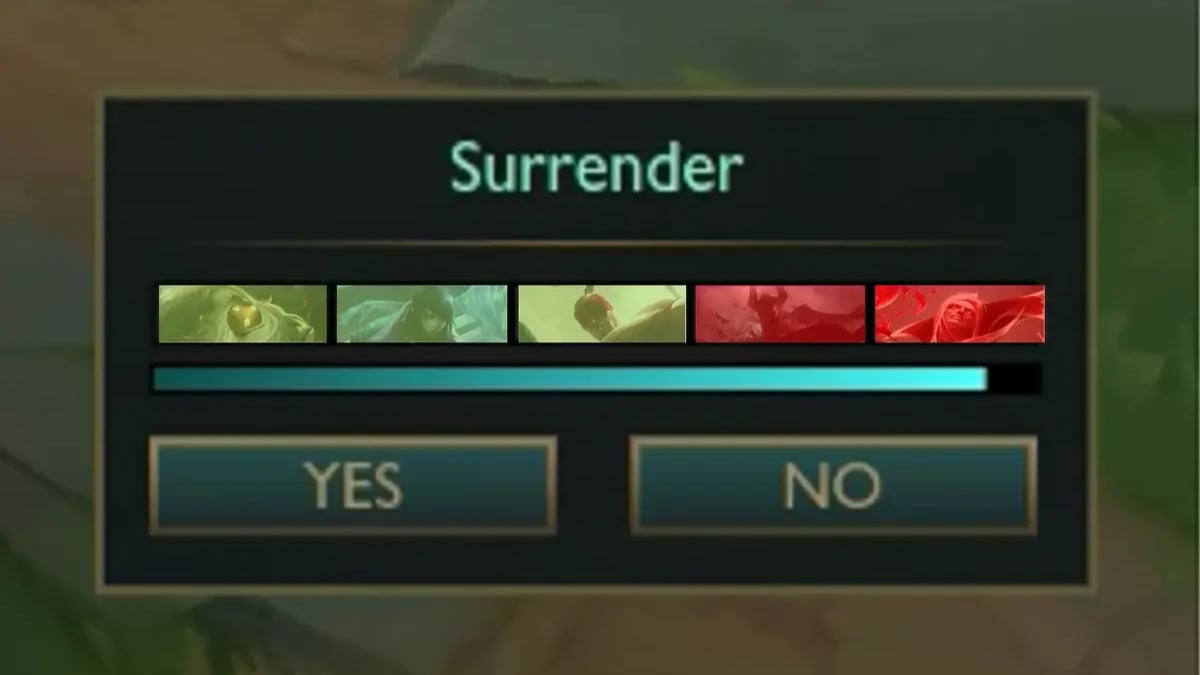
Riot designer August Browning says the studio’s internal numbers back up something League of Legends players have argued about for over a decade: when a team calls a game lost, it usually is.
According to August, Riot’s data shows players are correct in the “vast majority” of cases when they decide a match has reached the point where forfeiting makes sense.
View on Threads
The lazy way to run this analysis would be to count how many surrendered games ended in a loss. That number is 100%, because a passed surrender vote is the loss. Useless.
Instead, Riot looked at the game state at the moment of the surrender, most importantly the gold deficit at that minute, and compared it against the historical win rate of teams sitting in the same position across the wider player base.
The result: surrender calls generally happen in game states that are already tied to extremely low comeback rates.
Gold difference works well as a shorthand here because it quietly bundles together everything else. Kills, farm, turret plates, structures, objective control, and item completion all feed into it. A team 10,000 down at 18 minutes isn’t just poor, it’s fighting opponents with more items, better vision, and free rein over the map.
What it doesn’t say
August didn’t put a percentage on it, and Riot didn’t publish a formal study. “Vast majority” is as specific as it gets, so treat any hard number you see as invented.
It also doesn’t mean every /ff vote is justified. One tilted mid laner going zero-two and spamming the vote isn’t the same as five players agreeing the Nexus is coming down. It’s not fully clear whether August was talking about every attempted vote or only the ones that actually passed, and those are very different data sets.
And “very unlikely to win” isn’t “impossible to win.” League still has shutdown bounties, objective bounties, catch-up XP, Elder Dragon, and brutal late-game death timers. Comebacks happen. They’re just rare enough that the numbers don’t reward hoping for them.

