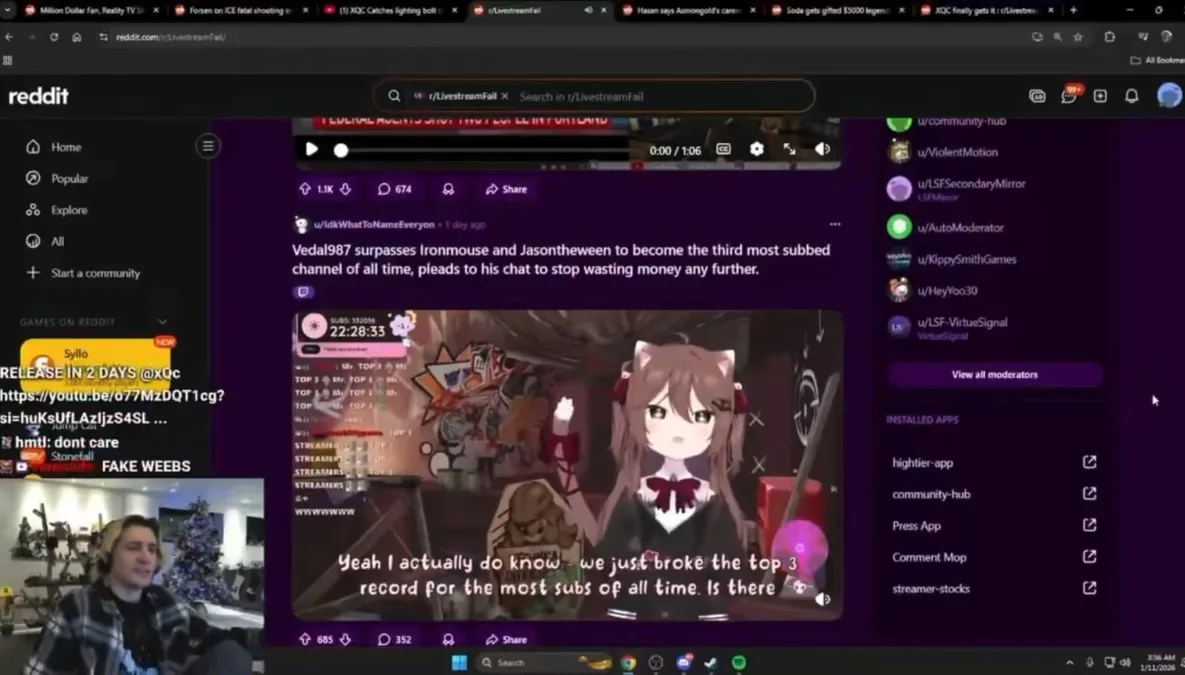
Félix “xQc” Lengyel got people talking during a recent Twitch stream when he questioned why anime and VTuber culture so often centers around childlike character designs and themes.
In a clip that circulated online, xQc commented on what he sees as a pattern of youthful-coded traits in the space. He pointed to small character proportions, high-pitched voices, school settings, and childlike behavior as examples. The streamer framed these elements as odd and potentially problematic, suggesting they cross into uncomfortable territory.
The comments came while xQc was reportedly watching or discussing VTuber content, though the exact context varies in different accounts. Some viewers claim he was reacting to AI VTuber Neuro-sama, created by developer Vedal, though this hasn’t been independently confirmed.
VTubers use virtual avatars tracked to their facial movements through software like VTube Studio. The avatars typically adopt anime-inspired visual styles with large eyes, simplified features, and colorful designs. These aesthetic choices stem from anime’s broader visual language, where big eyes and soft features increase expressiveness and readability.
The “cute” or “kawaii” aesthetic runs deep in Japanese media culture, influencing everything from mascots to product design. Many anime series are also written for teen audiences and published in youth magazines, which explains why high school settings are common. Adult fans often watch these series out of genre preference or nostalgia.
But xQc’s critique touches on a real tension in the community. While most VTubers use stylized adult avatars, concerns exist around characters designed to appear explicitly childlike, especially when paired with sexualized content or behavior. Platform policies at Twitch and elsewhere prohibit sexual content involving minors or youthful-looking characters, though enforcement remains inconsistent.
Defenders of VTuber culture argue the criticism overgeneralizes. They point out that “cute” doesn’t automatically mean “childlike” or “sexual,” and that many streamers simply use anime art styles without any inappropriate intent. Others note that VTubing offers privacy protection, particularly for women who want to avoid face-cam harassment and stalking.

