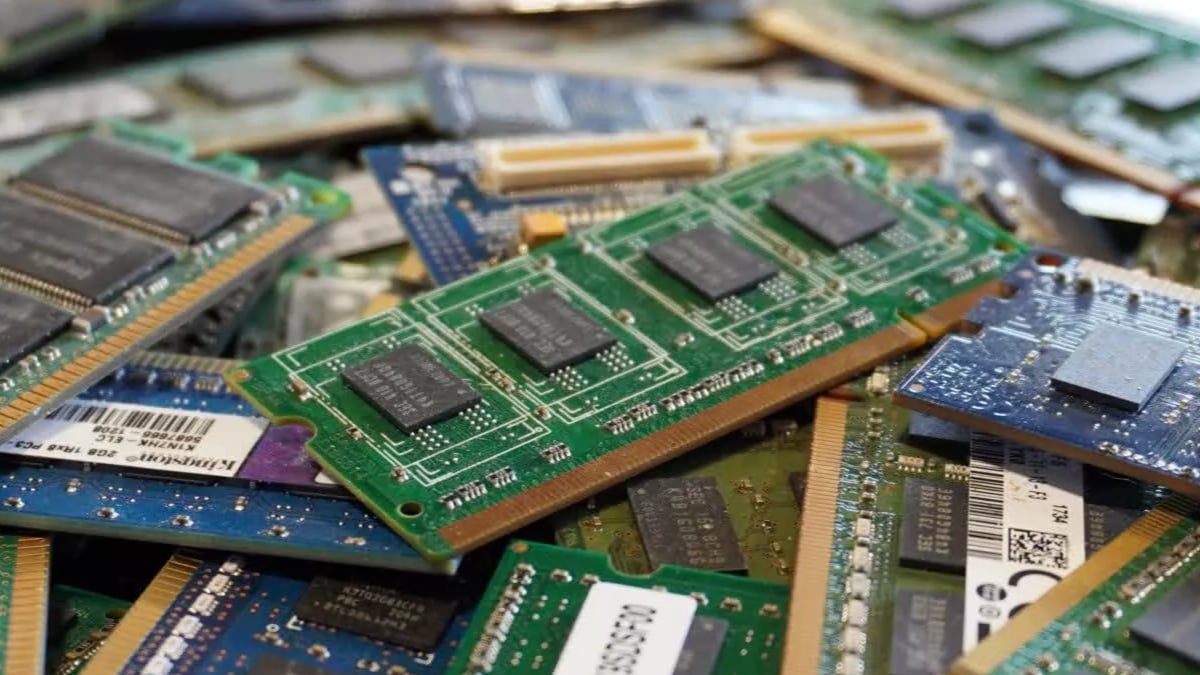
The memory industry has reportedly booked out its available production capacity for all of 2027, with DRAM and high-bandwidth memory already spoken for. If accurate, it means new customers walking in today would find almost nothing left to buy for a year that hasn’t even started.
Before anyone panics: this doesn’t mean shops will be empty in 2027. In semiconductor terms, “sold out” means suppliers have assigned their currently planned output to customers through contracts, volume commitments, prepayments, and reserved production slots. Chips will still be made. There’s just very little uncommitted capacity for anyone showing up late.
The driver is no mystery. AI accelerators need huge amounts of HBM, which stacks DRAM dies vertically to feed data to the chip fast enough. The servers around those accelerators then need conventional DRAM on top of that. A single data center order can swallow more memory than a whole console generation.
Hyperscalers and AI firms also plan years ahead, sign multi-year deals, pay upfront, and accept premium pricing. That makes them far more attractive customers than a laptop brand ordering quarter by quarter.
Why nobody can just build more
Advanced memory comes from a very short list of suppliers: Samsung, SK hynix, and Micron. HBM narrows that list further because it needs die stacking, through-silicon vias, advanced packaging, and qualification for specific AI platforms. Packaging and testing can bottleneck supply even when DRAM wafers exist.
New fabs take years. They need billions in capital, clean rooms, lithography tools with long delivery times, power, water, trained staff, and a long ramp before yields make production profitable. Memory also has a brutal boom-and-bust history (Qimonda went insolvent in 2009 after one such crash) so suppliers are cautious about overbuilding for demand that might cool.
They can shift production mix instead, converting lines toward higher-margin HBM. That helps AI customers but can starve conventional DRAM, which is exactly the memory that ends up in gaming PCs, laptops, and consoles.
The knock-on effects for gaming hardware are plausible, not guaranteed. DRAM contract prices have already climbed sharply, and hardware makers have started warning about component costs. Higher-memory PC configurations could get pricier, discounts could get thinner, and standard RAM and VRAM capacities could stop growing as quickly. Console makers usually lock in supply years in advance, so existing deals may shield them, but renegotiations and future hardware are exposed.
Retail prices depend on far more than factory bookings: existing inventory, contract cycles, retailer markups, tariffs, logistics, and whether device makers quietly cut memory specs.
Also worth noting: NAND flash, the stuff in your SSD, is a separate category. A DRAM and HBM capacity report says nothing directly about storage supply.
The open question is whether suppliers can add meaningful output before 2027 arrives, or whether AI customers start trimming their commitments and release capacity back into the market.

