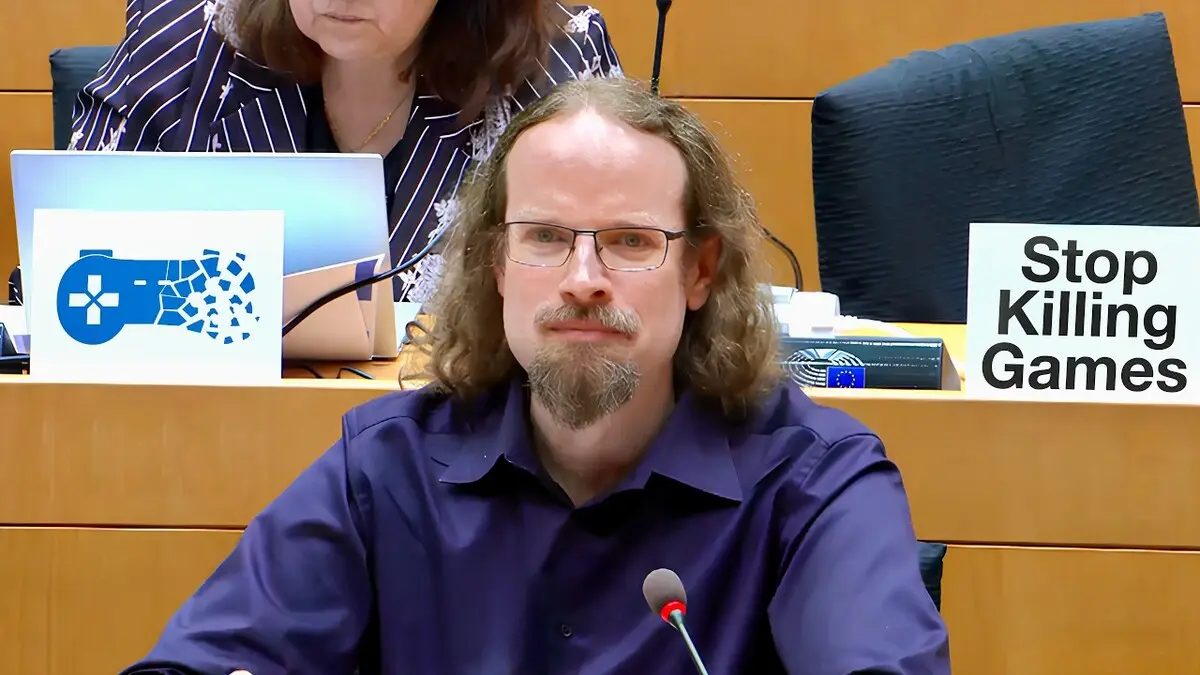
YouTuber and gaming preservation advocate Ross Scott addressed the European Parliament this week to push for laws protecting players when online games get shut down. Scott leads the Stop Killing Games campaign and used the platform to argue that publishers should be required to plan for what happens after they pull the plug on server-dependent titles.
The core problem is simple. Modern games often need constant connection to publisher-run servers for authentication, progression systems, or matchmaking. When those servers go offline, the game can become completely unplayable even if you own it. Scott wants legislation that forces publishers to create end-of-life plans so customers can still access what they paid for.
Scott brought receipts. He cited Concord as a recent example, noting that the game cost at least 370 million euros to develop but shipped without any post-shutdown plan. The point was clear: if you can spend hundreds of millions making a game, you can budget for keeping it playable after support ends.
The campaign presented data showing roughly 1,100 games that have been killed off when official support ended. While there’s some debate about how many are truly unplayable versus just missing online features, the scale shows how common this issue has become.
End-of-life plans could take different forms. Publishers might release offline patches, allow community-hosted servers, or provide server software for players to run themselves. The campaign isn’t demanding every game stay online forever, just that there’s some path forward after shutdown.
In recent years, gaming has shifted hard into live service territory. Even premium-priced games now rely on central servers for basic functionality. Once a publisher decides to move on, that game effectively dies unless someone creates unofficial workarounds through private servers or modified clients.
When games become artifacts
The preservation angle makes this more than just a consumer rights issue. Games with server dependencies are nearly impossible to archive properly. Unlike older titles that can be preserved and studied, always-online games risk becoming lost media the moment support ends.
Scott’s appearance at the European Parliament marks a major step for the campaign. Getting game preservation in front of actual policymakers moves this from fan frustration to potential legislative action. Whether that results in new EU regulations remains to be seen, but the campaign has clearly reached beyond gaming forums and YouTube comments.

