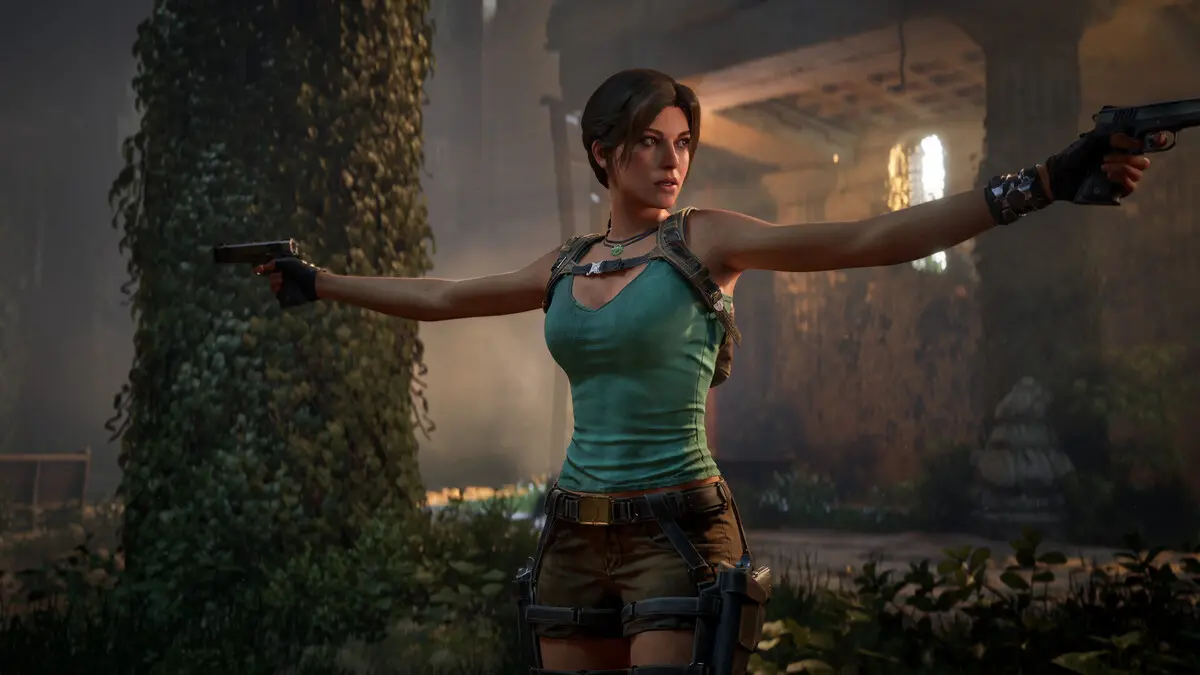
The Steam listing for Tomb Raider: Legacy of Atlantis has confirmed that the game contains “AI-assisted assets” that were later “refined by humans.” The disclosure, found in Steam’s standard AI-content section, has set off a debate about how much of the upcoming adventure was actually shaped by machines.
The exact wording is short and very vague. It admits AI tools were used somewhere in the asset pipeline, then states that humans worked on the output before it shipped. What it doesn’t say is which assets, how many, or for what purpose.
Valve introduced its AI-content disclosure system in January 2024. Developers submitting games to Steam must declare whether their title uses AI-generated or AI-assisted content, split into two categories: pre-generated content created before release, and live-generated content produced while the game is running.
Some of that information is shown publicly on store pages. Enforcement, however, mostly relies on developers being honest about their own pipelines, since detecting AI work after the fact is extremely difficult.
The Legacy of Atlantis disclosure falls under the pre-generated category, meaning AI played some role in creating material that will be in the final game.
What “refined by humans” could mean
The phrase “AI-assisted assets” can cover a huge range of workflows. It could refer to AI-generated texture bases later painted over by artists, concept art used as inspiration, environmental filler props, image cleanup, upscaling, or even code suggestions.
The follow-up that everything was “refined by humans” is equally broad. Human refinement could mean light touch-ups or a full rebuild on top of AI scaffolding. Raw AI outputs rarely ship as-is in modern game development because they often have warped geometry, bad topology, broken text, and inconsistent lighting that fall short of production standards.
That is why studios using these tools almost always need artists to clean, retopologize, repaint, and integrate the results into the engine.
Why it matters for a big franchise
Tomb Raider is one of gaming’s most recognizable series, running since 1996 and carrying Lara Croft through multiple reboots. Crystal Dynamics has been leading recent development, with Amazon Games attached as the publisher of the next major entry built in Unreal Engine 5.
AI-assisted workflows are increasingly common across the industry, used for concept exploration, texture ideation, environmental decals, and code completion. The difference with generative AI is the ongoing fight over training data, copyright, and whether these tools are quietly replacing paid human work.

