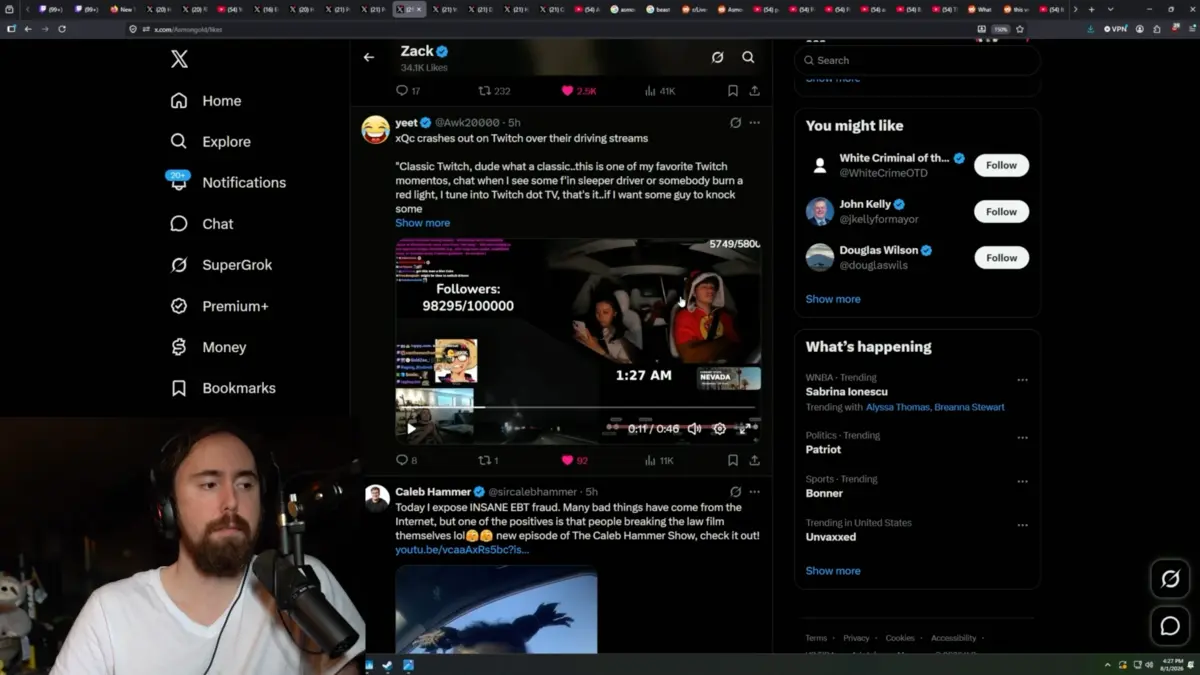
Asmongold has taken aim at Twitch over streamers who broadcast from behind the wheel, saying he “can’t wait for Twitch to be sued” once one of them causes an accident through distracted driving.
The comment came while he was reacting to footage of dangerous behavior in a moving car. His point wasn’t that he wants someone hurt, but that Twitch seems unlikely to change anything until it gets hit with real consequences, whether legal, financial, or otherwise.
It’s a familiar Asmongold argument. Companies act when it costs them money, not when people complain.
IRL streaming from a car is a recurring flashpoint. The problem is rarely the camera itself, but it’s what the driver does with the stream.
Reading chat. Checking donation alerts. Adjusting the phone. Performing for viewers instead of watching traffic. That hits all three types of distraction at once: eyes off the road, hands off the wheel, brain somewhere else.
Twitch doesn’t ban every broadcast from a moving vehicle, but its rules already prohibit behavior that puts the streamer or others at serious risk of physical harm, along with activity that breaks the law. Most places restrict handheld phone use, typing while driving, and video screens visible to the driver. The gap is enforcement, which tends to depend on reports, clips, and how loud the public anger gets.
Viewers have pushed for harder measures: instant suspensions for documented dangerous driving, escalating strikes, permanent bans for repeat offenders, or chat being hidden automatically when a phone detects road speed. Others point out the issue isn’t Twitch-exclusive at all, with Kick, YouTube, TikTok, and Instagram all hosting mobile live video.
Would a lawsuit actually work?
Legally, this is messier than the clip suggests. When a distracted driving crash happens, the driver is the obvious defendant. They control the car and owe other road users a duty of care. A livestream would be brutal evidence against them, showing exactly where they were looking and what they were holding seconds before impact.
Naming Twitch is a much taller order. Creators are generally treated as independent users rather than employees, the platform doesn’t tell anyone to drive while reading chat, and Section 230 remains a strong shield against claims built on user-generated content.
Being sued and losing a lawsuit are also two different things. Anyone can file. Surviving a motion to dismiss is the hard part.
The more realistic pressure point for Twitch is reputational: graphic crash footage spreading fast, advertisers asking questions, and lawmakers noticing.

