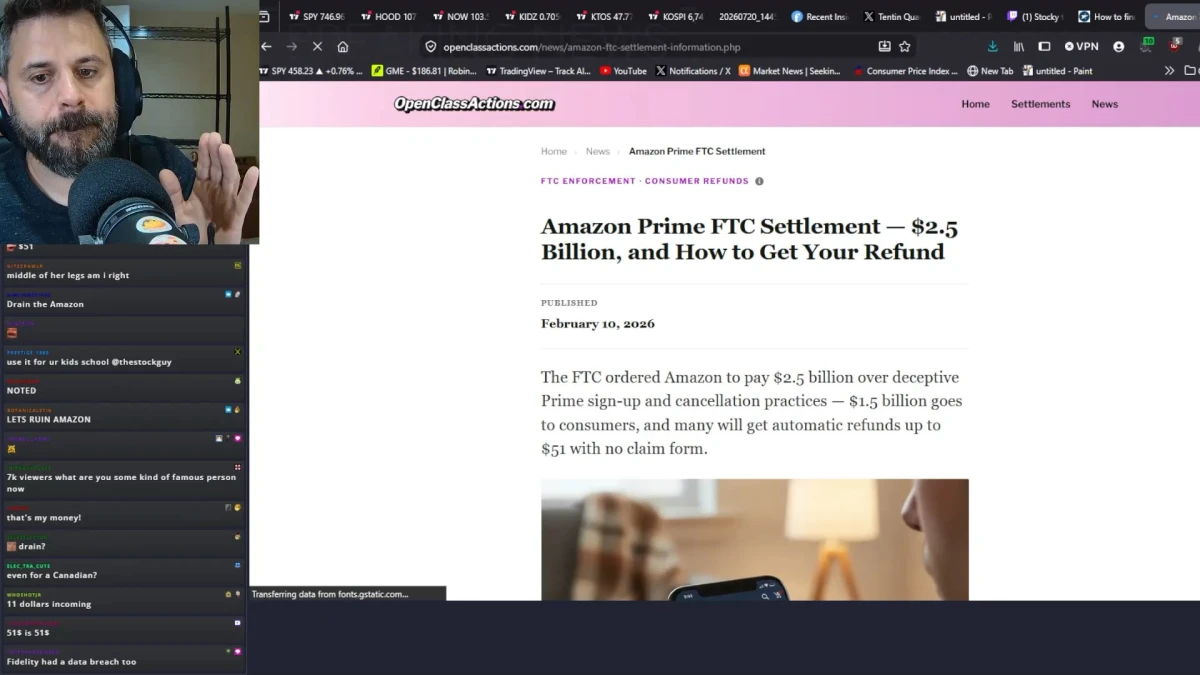
Amazon will pay $2.5bn to settle a Federal Trade Commission case over how it signed people up for Prime and how hard it made canceling.
The $2.5bn splits into two parts. $1bn is a civil penalty. That’s a fine paid for the alleged violations, and it doesn’t go to customers. $1.5bn is set aside for consumer refunds. Individual payments are capped at $51. That doesn’t mean everyone gets $51 either. Some people get less, depending on the fees they actually paid.
View on Threads
The refunds target a narrow group. You may get an automatic payment if you:
- Are a U.S. consumer
- Signed up for Prime between June 23, 2019, and June 23, 2025
- Enrolled through one of the sign-up screens the FTC flagged as a “Challenged Enrollment Flow”
- Used no more than three Prime benefits in a 12-month period
That last rule is the key filter. Low usage is the FTC’s way of spotting people who probably didn’t mean to keep paying for Prime.
A “Prime benefit” isn’t just watching a movie. It can include Prime shipping, Prime Video, Amazon Music, and Prime Gaming or Twitch-linked perks. So if you claimed a free Twitch sub through Prime Gaming, that may count against your usage. The exact counting rules live in the official settlement documents, not in guesswork.
If you fit the automatic group, you don’t file anything. Amazon and the settlement administrator identify you from enrollment and usage records, then send the money. These payments were set to go out within 90 days of the court order. Check the official site for the current status.
There’s also a separate claims path. Some customers with slightly higher usage, reportedly up to 10 benefit uses, or those who tried to cancel and couldn’t, may get a notice and have to submit a claim.
What Amazon allegedly did
The FTC sued Amazon in June 2023 in the U.S. District Court for the Western District of Washington. The agency claimed Amazon used “dark patterns,” confusing interface designs that push people toward Prime and away from the exit.
Alleged tricks included burying the “no thanks” option, making the sign-up button loud and obvious, and building a long, multi-screen cancellation maze. Amazon internally nicknamed that cancellation process the “Iliad” flow, after the famously long Greek epic. Amazon didn’t admit wrongdoing and says it followed the law.
Beyond the cash, Amazon has to clean up its act. It must clearly show the price, whether a trial converts to paid, whether it auto-renews, and how to cancel, all before you sign up. It also has to get clear, informed consent, and make canceling no harder than joining.

