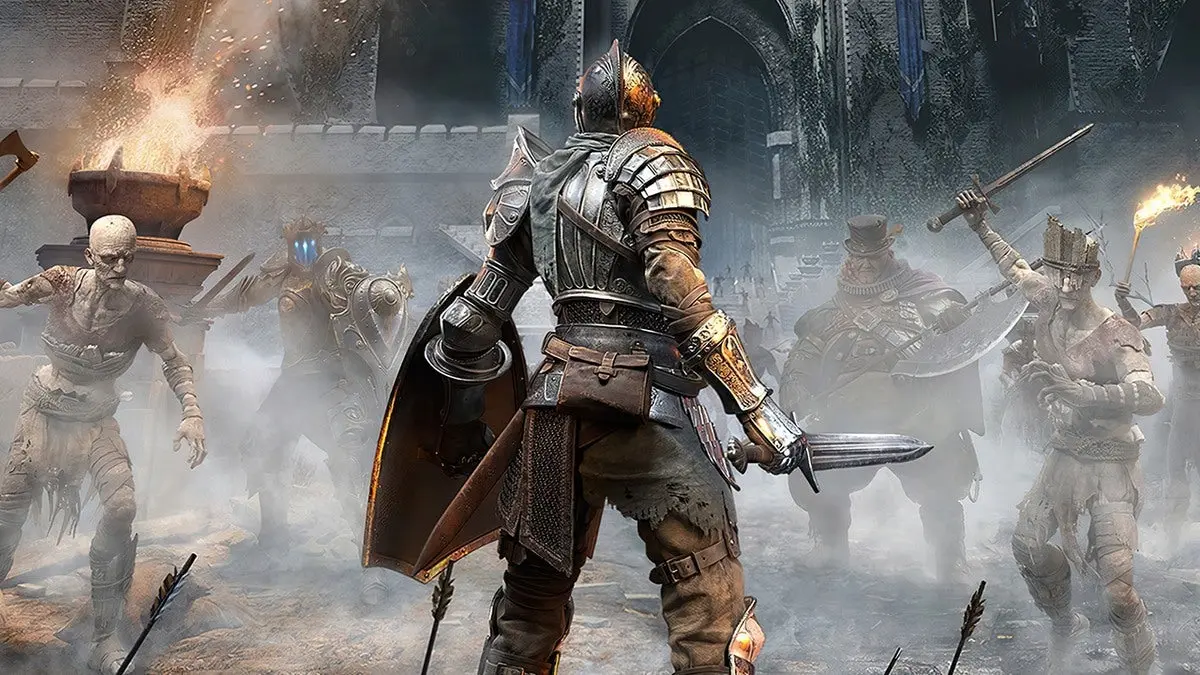
Game preservationist and modder Lance McDonald has published a full internal presentation of the earliest known prototype of Demon’s Souls, and it barely resembles the game that launched in 2009.
The material, reportedly dated to around May 2007, roughly 21 months before the PS3 original hit Japan, shows FromSoftware’s project as a first-person fantasy RPG. The video is narrated by Digital Foundry’s John Linneman and includes prototype gameplay, development slides, early mechanic explanations, unused enemies and environments, and an early plan for the game’s online features.
The prototype uses a control scheme described as being close to The Elder Scrolls IV: Oblivion, which had just landed on PS3 in March 2007 after a year of exclusivity on Xbox 360 and PC. Sony reportedly wanted a big fantasy RPG of its own, and FromSoftware was an obvious fit: the studio had been making first-person dark fantasy RPGs like King’s Field, Shadow Tower, and Eternal Ring since the mid-1990s.
The combat animations and spellcasting look pulled straight out of King’s Field, making this prototype the clearest “missing link” between FromSoft’s old catalog and the Souls games.
Enemies, level geometry, and encounter layouts also differ from the retail release, including a crumbling ceiling sequence that never made the final cut. It all looks rough, but this is unfinished development work from a project that was still figuring out what it wanted to be.
The ghost system came early
The presentation outlines a “ghost system” where a player who died would become a ghost and be sent into another player’s world. The ghost could use knowledge of dangers they had already faced and could regain physical form by helping complete an objective, possibly a boss kill.
That’s far more automatic and restrictive than the summon signs of the finished game. A red, phantom-like figure also shows up around the 7:40 mark, which looks like an ancestor of the Black Phantom invasions, though the presentation doesn’t confirm it worked the same way.
Player messages, bloodstains, voluntary summons, and the Body Form/Soul Form rules aren’t shown. What the material does prove is that death-linked, phantom-based online play was baked into the concept very early, even if Hidetaka Miyazaki reshaped how it actually worked before release.
The rest is history. Miyazaki took over the troubled project, later saying its “failure” status gave him unusual freedom to do whatever he wanted. Sony still didn’t get it, Shuhei Yoshida famously played an early build, got stuck, and wrote the game off. Sony published it in Japan in February 2009 and passed on the West, leaving Atlus to handle North America and Bandai Namco to handle Europe.
FromSoftware then took the formula to Bandai Namco for Dark Souls in 2011, and the rest turned into Bloodborne, Sekiro, and Elden Ring.

