Hello Games is marking a decade of No Man’s Sky with Cosmos, an update that finally lets players stop treating space as a loading screen between planets.
The headline feature is space station ownership. Players can become a Station Director, then rebuild the place from the outside in. Exterior parts change how the station looks from orbit, interiors can be torn up and rearranged, and new rooms can be added to make custom layouts. Stations have been static hubs full of vendors since 2016, so this is a big shift.
Base building also breaks free of the ground. You can now build floating bases anywhere in space, or plant a base directly on an asteroid or other rock formation. Freighter interiors and planet surfaces aren’t the only options.
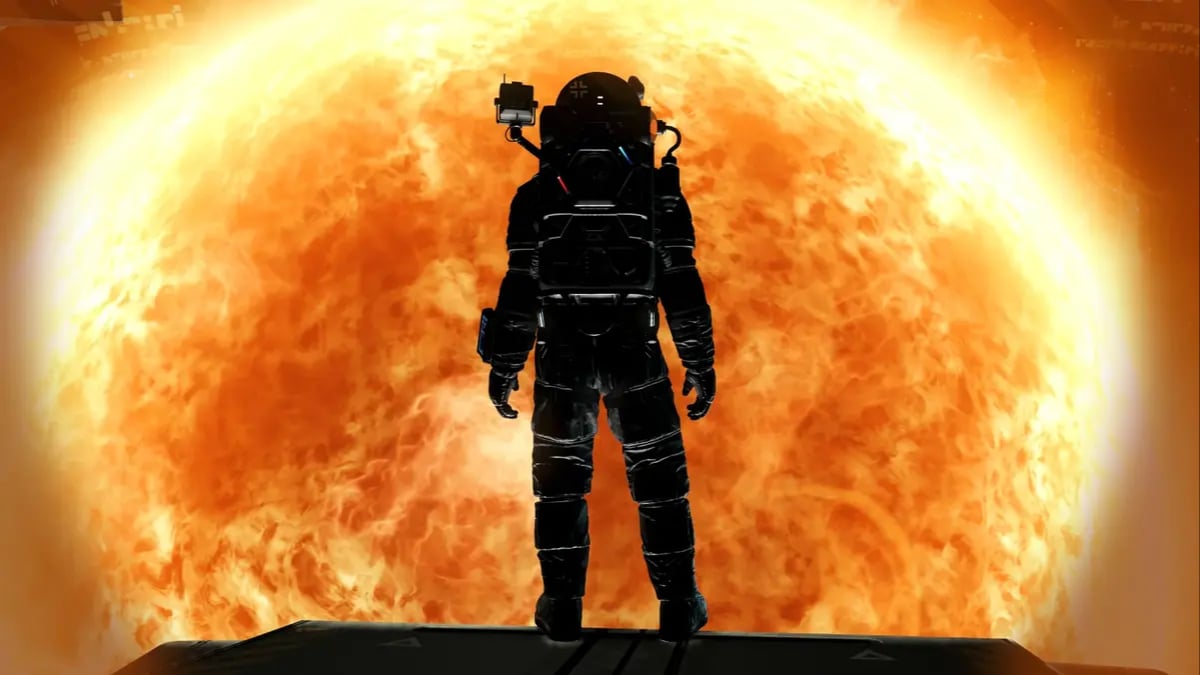
To make that work, Cosmos adds extravehicular activity. You can exit any ship anywhere in space and float around with improved jetpack controls. That ties directly into the update’s other new toys.
Chief among them are derelict hulks, enormous wrecked ships you can explore on foot for tech, cargo, and salvage. You can also break them down piece by piece, but shipbreaking causes structural failures, and an unstable hulk can go into meltdown and explode. Corvettes get a tractor beam upgrade that automatically hoovers up and processes salvage, plus a button to dump all cargo at once.
Star systems themselves have been rebuilt. There are more fixed points of interest between planets, denser asteroid belts packed with resources, and new ice fields containing a new material. The system map has been redesigned in 3D to show planets, points of interest, and detected signals.
Stars are now physical objects you can fly to, which takes roughly five minutes of straight flight. Worth managing expectations, though: Planets still sit at fixed positions and don’t orbit anything. Stars are destinations, not the center of a simulated solar system.
New deep-space outposts offer trading, resource processing, and salvage contracts that pay in materials and faction standing. Some outposts have been overrun by biological growth, and clearing out the horrors inside rewards rare biological samples.
On the social side, Cosmos adds alliances. Players can form or join one, coordinate exploration, and climb leaderboards ranked by population, activity, and controlled territory.
Visually, the update brings a planetary tech overhaul with more surface detail, better clouds seen from space, and particle lighting that lets transparent objects react to light.
10 years of free stuff
The anniversary expedition doubles as a history lesson, with milestones tied to major moments and past updates, complete with developer commentary. Rewards lean hard on nostalgia: framed artwork from old update covers, a Vintage Interceptor based on pre-release footage, a golden RASAMAMA S36 starter ship from the pre-Atlas Rises days, a Starbound V0.27 Multi-Tool pulled from early concept art, an astronaut cockpit figurine, and a Diplodocus companion straight out of the 2014 trailers. Twitch Drops add ships, Multi-Tools, companions, base parts, and fireworks.
No Man’s Sky launched in August 2016 to one of the messiest receptions in modern gaming. Every major update since has been free.

