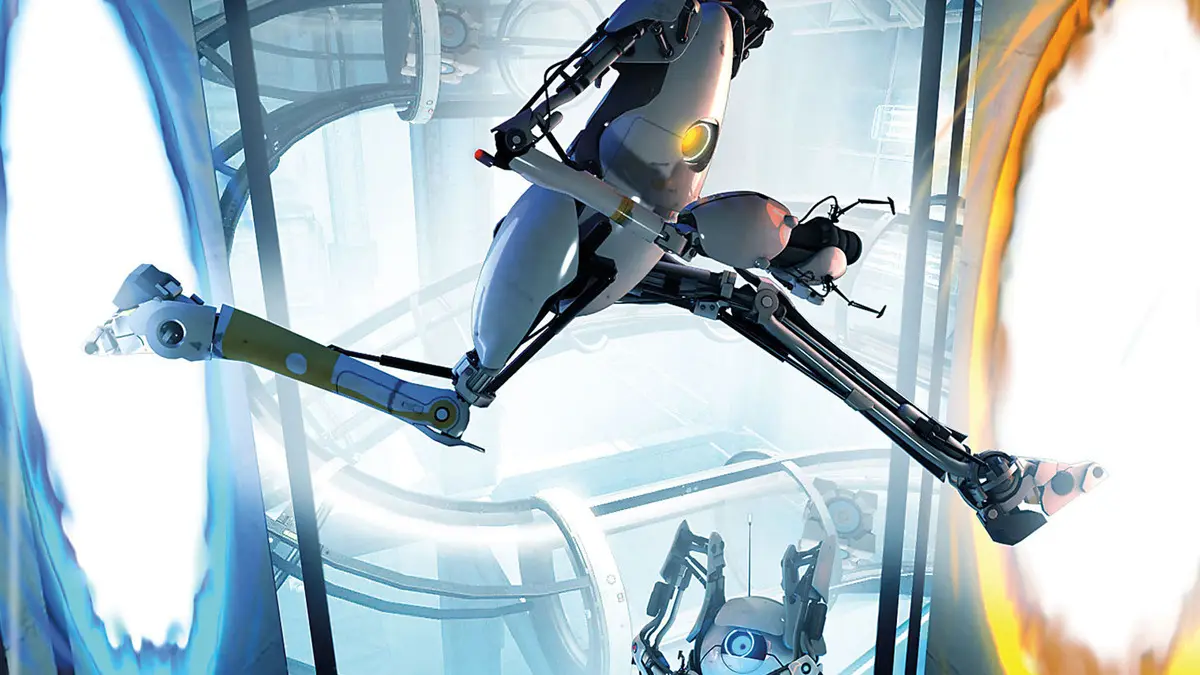
A huge pile of files said to come from Valve’s legacy “Steam2” content-server infrastructure has reportedly leaked online, and the headline item is an alleged Portal 2 development build.
Steam2 refers to Valve’s older content-delivery tech and servers, the stuff that used GCF cache files before Valve moved everything to SteamPipe in the early 2010s. Old depots stored on that system can contain versions of games that regular Steam users can no longer download.
According to people discussing the archive, the material covers roughly 2007-2011. The clearest claim is that Portal 2 content is in there, including a “2009 beta.” What form that beta takes is unclear: it could be a playable build, a partial build, loose depots, tools, or source assets. The dump allegedly contains all F-Stop assets, but no F-Stop levels.
F-Stop was the experimental concept Valve worked on before Portal 2 became Portal 2. Instead of a portal gun, it was built around a camera-style mechanic. Valve eventually dropped it and went back to portals, Chell, GLaDOS, and Aperture Science. The final game launched on April 19, 2011.
If the archive really holds a complete set of F-Stop assets, that would be a solid piece of documentation for a strange transitional period in Valve’s history. But assets without levels aren’t a playable prototype. Textures and models don’t rebuild a cancelled game.
Everything here remains unverified. Nobody knows who pulled the files, how they got them, or when. It isn’t clear whether the data came from Valve infrastructure, an old mirror, a backup, or a private collection stitched together over years. Valve hasn’t confirmed the archive, and there’s no evidence of a recent breach of Valve systems: old files don’t tell you when they were copied.
The date range predictably set off speculation about Half-Life 2: Episode Three, since Episode Two shipped in October 2007. Others asked about Left 4 Dead 3, early Team Fortress 2 material, and multicore “hub” builds of Portal 2. None of that has been found. Those were wishes, not discoveries.
Researchers will need days, if not weeks, to build manifests, check hashes, and match depot IDs before anyone knows what is genuinely in there.

