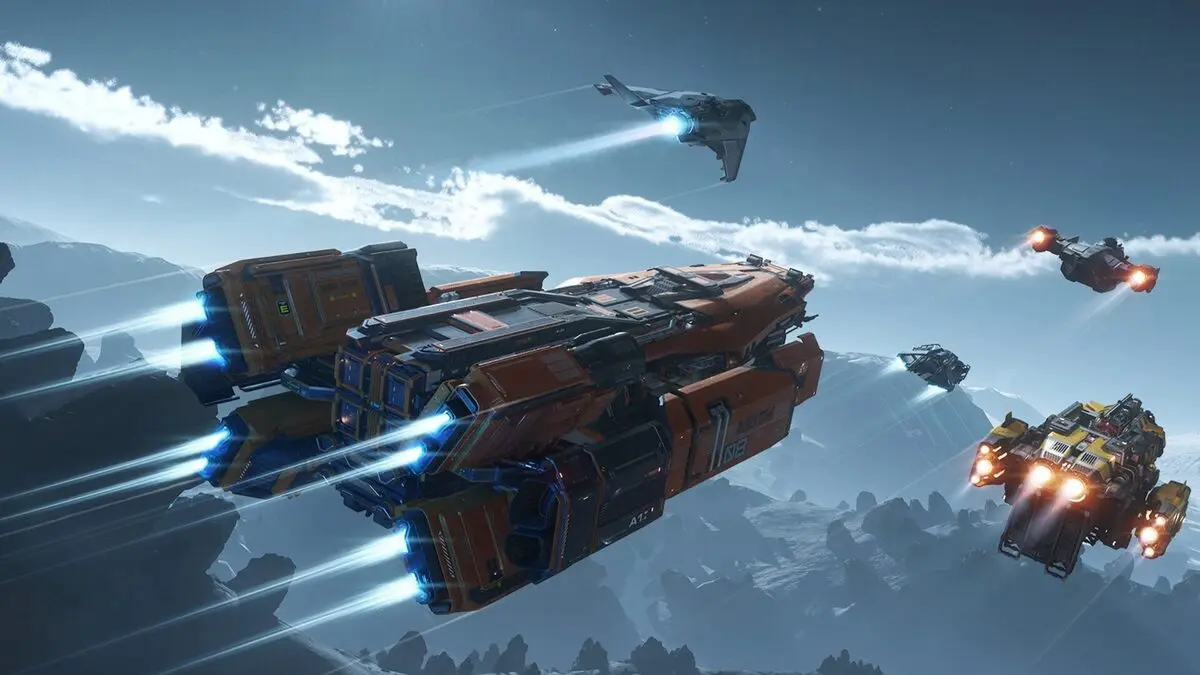
Cloud Imperium Games’ space sim Star Citizen has passed $1bn in public crowdfunding, a number no other game in history has come close to raising directly from players.
The figure comes from the studio’s own funding tracker on the Roberts Space Industries website, along with third-party dashboards that monitor daily pledge activity. It’s a wild milestone for a project that started as a modest Kickstarter campaign back in 2012.
Chris Roberts, the man behind Wing Commander and Freelancer, pitched Star Citizen as a return to high-end PC space sims. The original Kickstarter pulled in just over $2m. More than a decade later, the pledge store has done the rest of the heavy lifting.
The money isn’t traditional crowdfunding in the donation sense. It’s a mix of starter packs, standalone ships, ship upgrades, subscriptions, merchandise, and limited-time digital ship sales. Some ships go for $5,000 or more, and many are sold as concepts before they’re even playable in-game.
Recent funding activity has been enormous. Monthly totals have reportedly ranged between $8m and $32m, with single-day spikes driven by limited ship sales. One recent drop allegedly sold 1,000 ships at $5,000 each, pulling in roughly $5m in about 10 minutes.
The $1bn bankrolls two projects. There’s the Persistent Universe, the multiplayer sandbox where players can mine, trade, haul cargo, run bounties, fight in FPS missions, and walk around the interiors of their ships. And there’s Squadron 42, the single-player cinematic campaign currently targeting a 2026 release window.
Squadron 42 features a cast that includes Mark Hamill, Gillian Anderson, Gary Oldman, Mark Strong, Andy Serkis, Ben Mendelsohn, Henry Cavill, Liam Cunningham, and John Rhys-Davies. Performance capture for most of it has been done for years.
Schrödinger’s alpha
The milestone brings back the long-running argument around the project. Star Citizen is marketed like a live-service game when ships go on sale, and treated as an early alpha when bugs, server crashes, and missing features come up. Players still report performance issues in cities, elevator glitches, and clipping through floors.
Defenders point out that the current alpha already does things no other space game does: seamless planetary landings, walkable ship interiors, and first-person traversal inside a persistent online universe. Competitors like Elite Dangerous, No Man’s Sky, X4, and Starfield each cover parts of that vision, but none combine all of it.
Spread across 14 years, $1bn averages out to about $71m a year: significant, but not unbelievable for a global studio building two games at once. Still, no other crowdfunded project has ever pulled in this kind of money, and Star Citizen keeps doing it without a finished release on the horizon.

