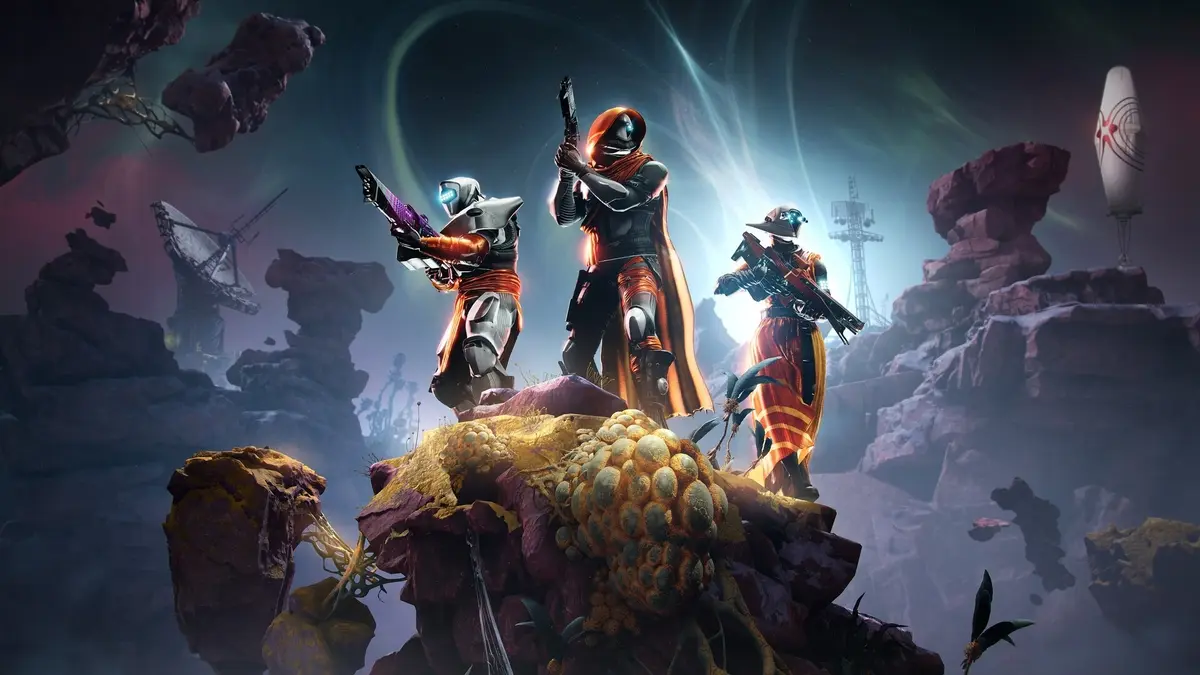
Bloomberg reporter Jason Schreier has finally addressed the question Destiny players have been asking for two years: Why didn’t Bungie just start making Destiny 3 after The Final Shape wrapped up the Light and Darkness saga?
The answer, according to Schreier, is the same one that explains most big decisions in the games industry. Money. A new numbered Destiny sequel would require an enormous investment, and Bungie wasn’t in a position to simply greenlight one the moment The Final Shape shipped.
The Final Shape, released in June 2024, closed out a decade of storytelling involving the Traveler, the Witness, and the Guardians. Many players assumed it would be the natural launchpad for a brand-new game. Instead, Bungie kept building on Destiny 2 with its Episodes model and the upcoming Frontiers update.
Why a Destiny sequel is more expensive than most
Destiny 3 wouldn’t be a standard AAA sequel. It would need to match or beat Destiny 2‘s accumulated scope at launch, meaning new campaigns, raids, dungeons, PvP maps, social spaces, subclasses, loot systems, and the entire live-service backend that keeps the lights on.
On top of that, Bungie would have to decide what happens to years of player-owned cosmetics, weapons, armor, and expansion purchases. A reset risks alienating veterans. Carrying everything over creates massive technical headaches. Neither option is cheap.
Bungie’s situation hasn’t made the math easier. The studio went through layoffs in 2023 and 2024, and parts of its operation were absorbed deeper into Sony, which bought Bungie in 2022 for $3.6bn. Sony’s live-service ambitions have also taken hits, most notably the Concord shutdown.
Meanwhile, Bungie has poured resources into Marathon, its PvP extraction shooter, which came out in March 2026 after being delayed from its original September 2025 window.
Bungie announced the final update for Destiny 2, and a sequel doesn’t seem to be in the works.

