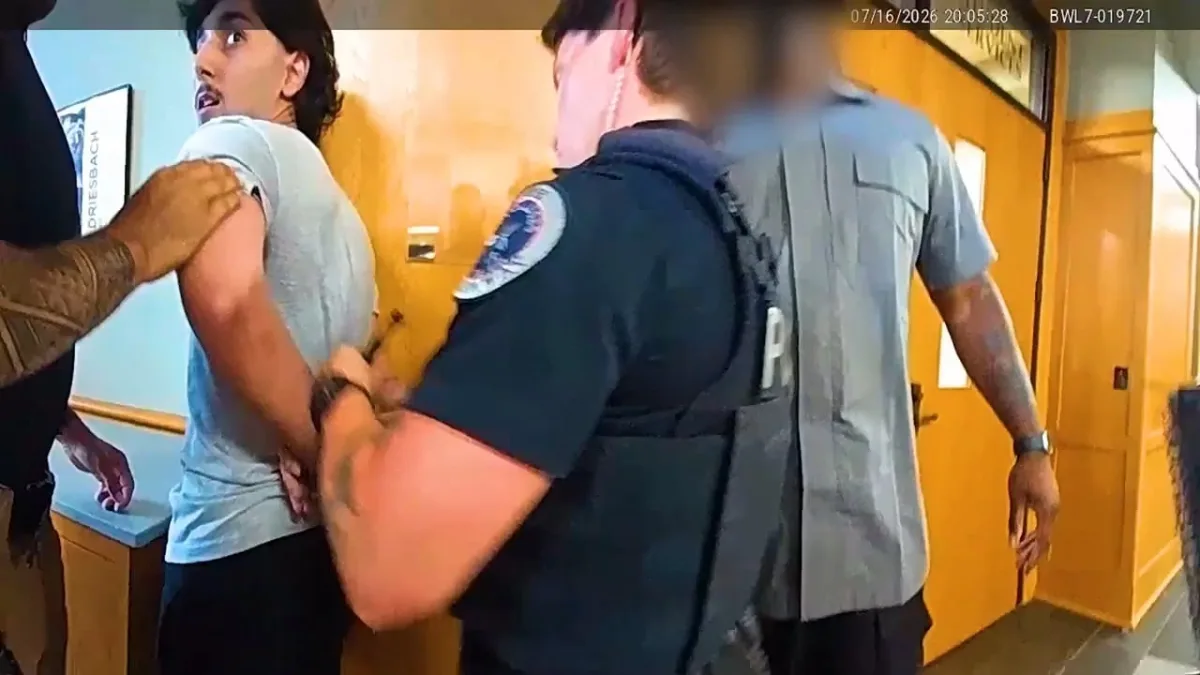
Police body-camera footage published by the YouTube channel Midwest Safety appears to show two young Canadian content creators being handcuffed after allegedly entering Kai Cenat’s invitation-only Streamer University without permission.
The clip picks up after officers have already made contact with the pair. Both are placed in cuffs while police explain the arrest process and discuss a criminal trespass allegation.
According to statements heard in the footage, the two had traveled roughly 27 hours from Canada to reach the event. Their apparent plan was to find invited creators, get on stream, and make content out of it.
One of the detainees tells officers he’s 17. That immediately complicates things, since police say a parent or guardian would need to be involved in his release: a serious issue when your parents are in another country.
The teenager is visibly upset in the video and worries that the arrest has ended his life and his streaming ambitions. An officer tries to reassure him that his life isn’t over, before joking that his streaming career might be.
Officers also discuss the possibility of consular notification, standard procedure when foreign nationals are detained in the US.
The pair talk openly with police about where they came from, what they were doing, and their gear. One of them asks how he can get his equipment back. Officers indicate some property may be held rather than handed back on the spot.
Police additionally explain that resolving the case could mean returning to the jurisdiction, and that skipping a court date can lead to a warrant.
Important context: an arrest isn’t a conviction. The publicly available material doesn’t show whether prosecutors formally filed charges, how the case was handled, or whether the teenager’s case went through juvenile court.

