The Steam listing for Rideshare “Stimulator” now carries an official AI-generated content disclosure, and it covers a lot more than one side mode.
The statement splits the game’s AI use into three areas: voice generation and localization, passenger content in the optional Free Ride mode, and music on the in-game radio stations.
The key detail is the split between who wrote the script and what performs it. The developer says the campaign’s story, characters, and dialogue came from human writers. But the very next sentence says AI tools handle voice generation and “some localization.”
The disclosure doesn’t say whether every character uses a synthetic voice, whether some actors recorded conventional performances, or whether any voice likenesses were licensed. It also doesn’t say which languages get AI-assisted localization or whether human translators review the results.
Free Ride can be skipped
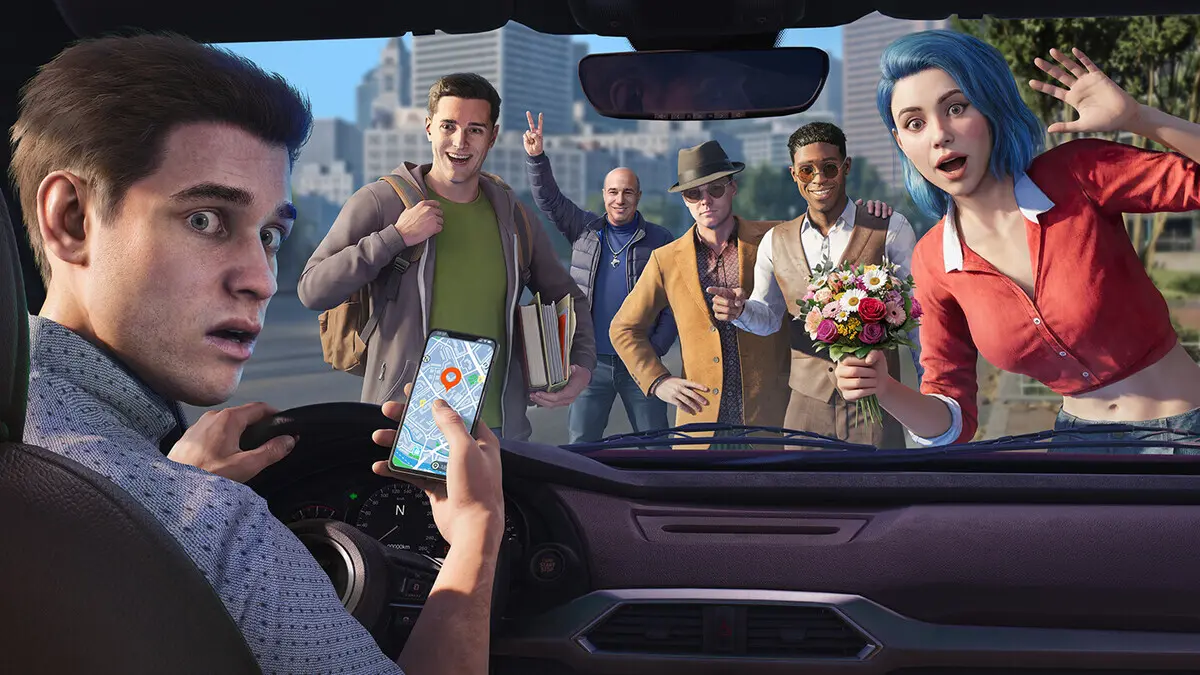
Free Ride is the mode built around generated content. It includes AI-generated passenger missions and localized dialogue, and the developer says players can skip it entirely if they only want human-written narrative.
That opt-out only applies to Free Ride, though. The campaign still uses AI voices and some localization either way.
There is also no technical detail on how Free Ride works. The disclosure doesn’t say whether passenger content is generated live during play, generated in advance and shipped with the game, or built from a mix of templates and generated text.
The radio is a mix
The game’s stations include both human-made and AI-generated music, with AI-containing stations labeled in-game.
The labeling is at the station level. Nothing in the disclosure says individual tracks will be marked, whether hybrid songs count, or whether players can mute AI stations without switching the radio off. No music generator, model, or rights holder is named.
The messy backstory
The store page update lands after a public dispute around the project. Stella Sacco, former lead writer on the project, alleged on Bluesky that leadership pushed the team toward generative AI, claiming an executive argued that “gamers love new tech” and that using AI would be “great marketing.” According to her account, her manager pushed back and defended keeping a human writer on the job.
A response attributed to Saber CEO Matthew Karch went the other way, saying: “I would frankly in retrospect have been happy to replace her with AI. At least we would be dealing with someone programmed to be honest.”
Why the notice is there at all
Valve rolled out its AI content survey in January 2024. Developers must declare whether their game contains pre-generated AI material made during development, live-generated material produced while the game runs, or both. For live systems, Valve asks studios to explain their guardrails, and players can report illegal generated content.
Relevant parts of that survey then show up publicly on the store page.
Generative AI is allowed on Steam as long as the rules are followed. A disclosure appearing on a listing isn’t a punishment, an investigation, or a verdict on quality, it is a label for shoppers. No action by Valve against Rideshare “Stimulator” has been reported.

