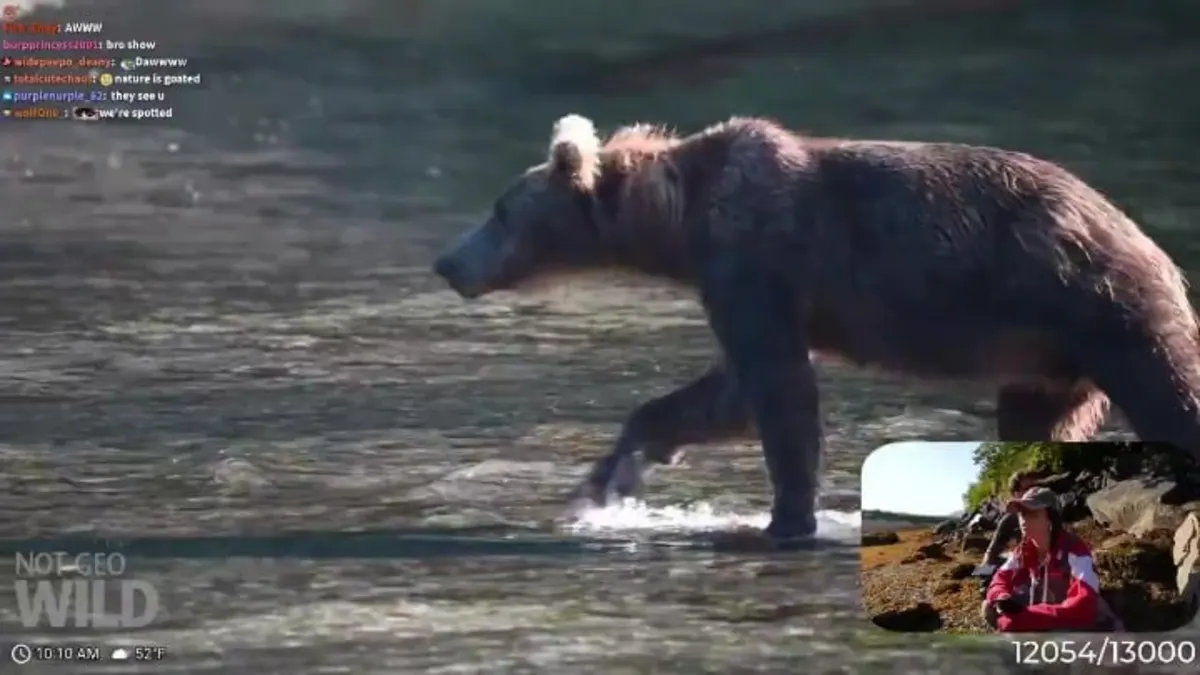
Maya Higa got the moment every wildlife streamer hopes for. During her Alaska livestream, she watched a wild female brown bear walk along a river with her cubs and cross the water, and she started crying on camera.
The bears simply moved through the landscape while Higa and her team filmed from a safe viewing spot. Her reaction was pure awe at seeing a bear family in the wild.
It fits the whole point of the trip. The Alaska broadcasts are part of a series the team jokingly calls “NotGeo,” a nod to the “Nat Geo” name Higa and Adapt used for their South Africa streams last year. Since Higa has actually worked with National Geographic, this one became “Not” Geo.
The project grew out of wildlife documentary reaction streams, which then turned into the idea of going out and filming real animals instead. Connor, Higa’s camera operator and Alveus Sanctuary’s director of operations, built the camera and connectivity setup needed to broadcast live from remote wilderness.
That is no small task. Streaming from the Alaskan backcountry means fighting weak signal, limited upload speeds, battery life, weather, and wind noise, all while staying quiet enough not to disturb the animals.
Each NotGeo trip is tied to a fundraiser for a conservation group in the region. For Alaska, the money is going to the Alaska Wildlife Conservation Center, a nonprofit in Portage that cares for Alaskan animals that can’t be released and runs conservation and education programs. According to figures shared during the streams, the campaign had pulled in roughly $33,000 by the time of the bear sighting.
Not exactly Fat Bear Week material
Some viewers noticed the mother looked lean and joked she would lose Katmai’s annual Fat Bear Week bracket. That is normal. Nursing and raising cubs burns huge amounts of energy, so a female with young often looks thinner than a bear without cubs. The team’s guide also mentioned a weaker salmon year and poor berry growth after a very cold winter in the area.
Cubs usually stay with their mother for several years while learning where to find food and how to avoid danger, including adult male bears. That is why guides keep viewers far back and never let anyone get between a mother and her young.
Higa, who founded the Texas-based Alveus Sanctuary, spends most of her streams with animal ambassadors in managed care. Seeing a free-roaming bear family instead was clearly a different experience.

